Key Takeaways
- Energy Efficiency: HVLS ceiling fans help reduce heating and cooling costs by improving air circulation and supporting more consistent indoor temperatures.
- Large Space Coverage: Unlike traditional fans, HVLS fans are designed to move large volumes of air across expansive areas such as warehouses, gyms, manufacturing facilities, and outdoor venues.
- Improved Comfort and Airflow: The slow, steady airflow created by HVLS fans helps reduce hot spots, improve ventilation, and create a more comfortable environment for occupants year-round.
What is an HVLS Ceiling Fan?
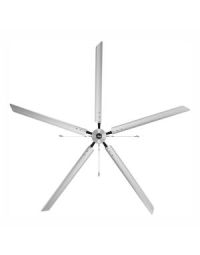
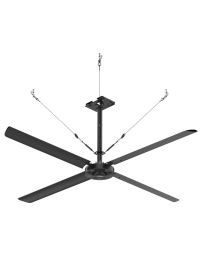
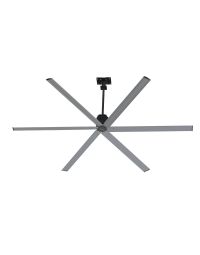
In the quest for efficient ventilation and climate control, High Volume Low Speed or HVLS ceiling fans have emerged as a game-changer, offering unparalleled benefits for many settings. These innovative fans are designed to move large volumes of air at a low speed, creating a comfortable and consistent airflow that enhances the overall climate within large spaces. Ideal for both indoor and outdoor applications, HVLS ceiling fans provide effective solutions for a range of environments. This guide explores the numerous advantages of HVLS ceiling fans, their various applications, and the different types available, while also touching on related roof ventilation solutions.
HVLS, or High Volume Low Speed, fans are designed to move large volumes of air at low rotational speeds, making them ideal for large spaces where traditional fans are less effective. These fans can cover areas ranging from 8,000 to 25,000 square feet, depending on their size and design, ensuring consistent airflow and comfort. For optimal performance, HVLS fans should be placed in the center of large spaces such as warehouses, gyms, or manufacturing facilities. In larger areas, multiple fans may be necessary and should be spaced appropriately to ensure even air distribution.
Indoor Application
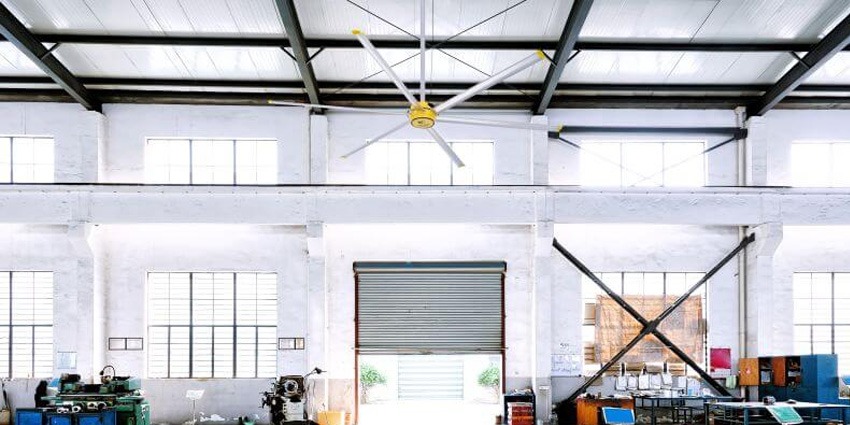
HVLS ceiling fans are highly effective in large indoor environments such as warehouses, manufacturing facilities, and sports arenas. In these expansive spaces, their ability to move a significant volume of air at a low speed helps to evenly distribute temperature and reduce heat stratification. This consistent airflow enhances comfort, improves air quality, and mitigates the effects of equipment-generated heat, leading to a more pleasant and productive environment for both workers and visitors.
Outdoor Application
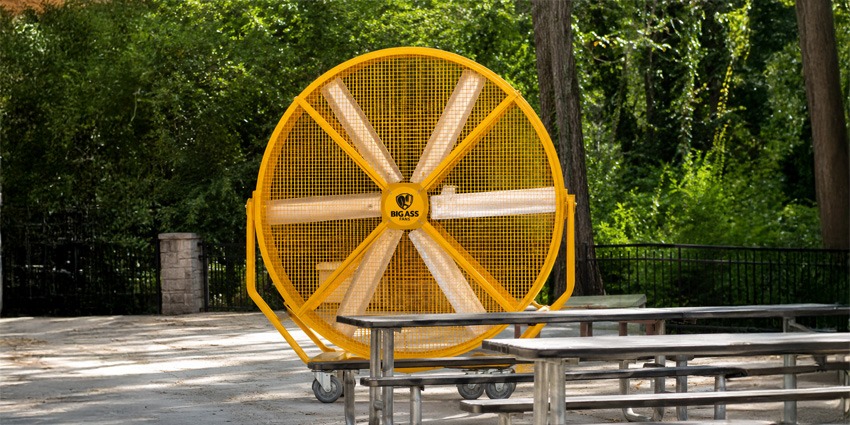
For outdoor settings like patios, event spaces, and open-air pavilions, HVLS ceiling fans offer exceptional ventilation and climate control. Their robust design and wide-reaching airflow make them ideal for managing temperature and humidity in open spaces, providing a refreshing breeze that keeps outdoor gatherings comfortable. By effectively circulating air, these fans help reduce heat build-up and enhance overall comfort, making them a valuable addition to various outdoor environments.
How HVLS Fans Work
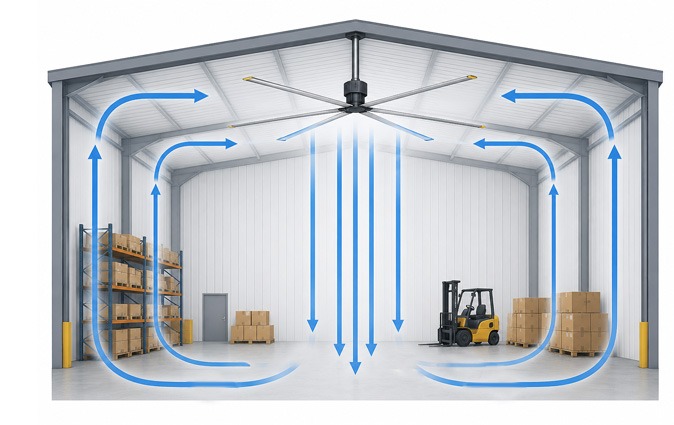
HVLS (High Volume Low Speed) fans, also known as industrial ceiling fans, operate by moving a large volume of air at a low speed, creating a consistent and gentle airflow throughout a space. Unlike traditional fans that often deliver a strong, localized breeze, HVLS fans use large, slow-moving blades to push air downward and across a wide area. This design helps minimize stratification, or the layering of air at different temperatures, which is common in large spaces. The result is a more even distribution of air and improved comfort for occupants.
The low-speed operation of HVLS industrial ceiling fans ensures energy efficiency and reduces noise levels, making them ideal for environments where high airflow is needed without the harshness of high-speed fans. By circulating air effectively, HVLS fans can also enhance the performance of HVAC systems, as they help maintain a uniform temperature and reduce the load on heating and cooling equipment. This makes HVLS industrial ceiling fans a valuable addition to large commercial and industrial spaces, where their ability to move air efficiently can lead to significant energy savings and improved air quality.
Where HVLS Fans Are Used
HVLS ceiling fans are versatile and can be effectively utilized in a range of settings:
- Industrial and Manufacturing Facilities: These fans are ideal for large warehouses and manufacturing plants where high ceilings and expansive floor areas benefit from improved air circulation and temperature regulation.
- Retail Spaces: In stores and shopping centers, HVLS fans enhance customer comfort and help manage indoor climate, leading to a more pleasant shopping experience.
- Event Venues: HVLS fans are also suitable for large event spaces such as arenas and convention centers, where they help maintain a comfortable environment for guests and attendees.
- Agricultural Settings: Farms and greenhouses use HVLS fans to control temperature and humidity, creating optimal conditions for crops and livestock.
Benefits of HVLS Ceiling Fans
- Enhanced Air Circulation: HVLS ceiling fans are renowned for their ability to distribute air evenly across large areas. Unlike traditional ceiling fans, which create localized breezes, HVLS fans generate a gentle, widespread airflow that helps maintain a consistent temperature throughout the space. This is particularly beneficial in large commercial and industrial settings, where temperature fluctuations can impact comfort and productivity.
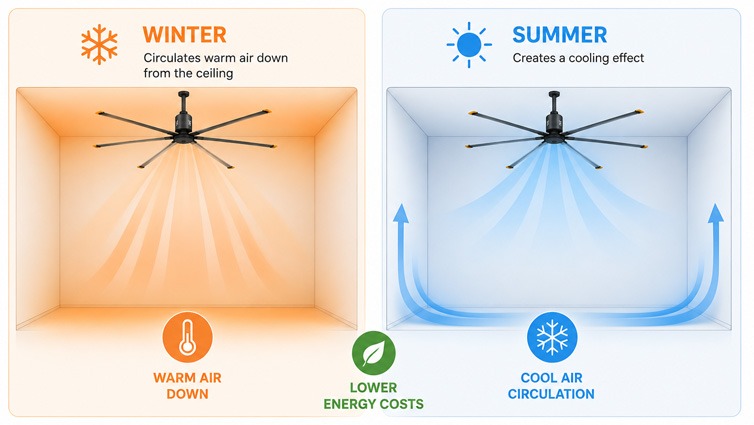
- Energy Efficiency: By improving air circulation, HVLS fans can significantly reduce the reliance on heating and cooling systems. In winter, these fans help circulate warm air that rises to the ceiling, making heating more efficient and reducing energy consumption. During summer, they create a cooling effect that can lower the need for air conditioning, leading to potential savings on energy bills.
- Improved Comfort: The even air distribution provided by HVLS fans creates a more comfortable environment for occupants. Whether in a warehouse, manufacturing facility, or retail space, these fans help to eliminate hot spots and ensure a pleasant atmosphere for employees and customers alike.
- Reduced Humidity: In humid environments, HVLS fans can aid in reducing moisture buildup by promoting air movement. This helps to prevent mold growth and maintain a healthier indoor environment, which is crucial for both comfort and safety.
HVLS Fans Efficiency, Sizing, and Cost Considerations
HVLS fans differ from traditional fans by moving a greater volume of air more efficiently at lower speeds, making them ideal for large commercial and industrial spaces. The size of an HVLS fan required depends on the dimensions of the space and the desired airflow, with larger areas needing bigger fans for effective air distribution. While HVLS fans are more expensive due to their advanced engineering, durable materials, and ability to enhance air circulation and energy savings, their cost typically ranges from $5,000 to $20,000, depending on factors such as size, brand, and additional features.
Shop HVLS Fans at HVACDirect.com
HVLS fans are an excellent solution for maintaining consistent airflow and improving comfort in large commercial and industrial spaces. Their advanced design ensures efficient air movement while reducing energy costs. Browse a variety of reliable and high-performing HVLS fans at HVACDirect.com to find the perfect fit for your space.
What is an HVLS Ceiling Fan?
In the quest for efficient ventilation and climate control, High Volume Low Speed or HVLS ceiling fans have emerged as a game-changer, offering unparalleled benefits for many settings. These innovative fans are designed to move large volumes of air at a low speed, creating a comfortable and consistent airflow that enhances the overall climate within large spaces. Ideal for both indoor and outdoor, HVLS ceiling fans provide effective solutions for a range of environments. This introduction explores the numerous advantages of HVLS ceiling fans, their various applications, and the different types available, while also touching on related roof ventilation solutions.
HVLS, or High Volume Low Speed, fans are designed to move large volumes of air at low rotational speeds, making them ideal for large spaces where traditional fans are less effective. These fans can cover areas ranging from 8,000 to 25,000 square feet, depending on their size and design, ensuring consistent airflow and comfort. For optimal performance, HVLS fans should be placed in the center of large spaces such as warehouses, gyms, or manufacturing facilities. In larger areas, multiple fans may be necessary and should be spaced appropriately to ensure even air distribution.
Indoor Application
HVLS ceiling fans are highly effective in large indoor environments such as warehouses, manufacturing facilities, and sports arenas. In these expansive spaces, their ability to move a significant volume of air at a low speed helps to evenly distribute temperature and reduce heat stratification. This consistent airflow enhances comfort, improves air quality, and mitigates the effects of equipment-generated heat, leading to a more pleasant and productive environment for both workers and visitors.
Outdoor Application
For outdoor settings like patios, event spaces, and open-air pavilions, HVLS ceiling fans offer exceptional ventilation and climate control. Their robust design and wide-reaching airflow make them ideal for managing temperature and humidity in open spaces, providing a refreshing breeze that keeps outdoor gatherings comfortable. By effectively circulating air, these fans help in reducing heat build-up and enhancing overall comfort, making them a valuable addition to various outdoor environments.
How HVLS fans work
HVLS (High Volume Low Speed) fans, also known as industrial ceiling fans, operate by moving a large volume of air at a low speed, creating a consistent and gentle airflow throughout a space. Unlike traditional fans that often deliver a strong, localized breeze, HVLS fans use large, slow-moving blades to push air downwards and across a wide area. This design helps minimize stratification, or the layering of air at different temperatures, which is common in large spaces. The result is a more even distribution of air and improved comfort for occupants.
The low-speed operation of HVLS industrial ceiling fans ensures energy efficiency and reduces noise levels, making them ideal for environments where high airflow is needed without the harshness of high-speed fans. By circulating air effectively, HVLS fans can also enhance the performance of HVAC systems, as they help maintain a uniform temperature and reduce the load on heating and cooling equipment. This makes HVLS industrial ceiling fans a valuable addition to large commercial and industrial spaces, where their ability to move, air efficiently can lead to significant energy savings and improved air quality.
Where HVLS Fans Are Used
HVLS ceiling fans are versatile and can be effectively utilized in a range of settings:
- Industrial and Manufacturing Facilities - These fans are ideal for large warehouses and manufacturing plants where high ceilings and expansive floor areas benefit from improved air circulation and temperature regulation.
- Retail Spaces - In stores and shopping centers, HVLS fans enhance customer comfort and help manage indoor climate, leading to a more pleasant shopping experience.
- Event Venues - HVLS fans are also suitable for large event spaces such as arenas and convention centers, where they help maintain a comfortable environment for guests and attendees.
- Agricultural Settings - Farms and greenhouses use HVLS fans to control temperature and humidity, creating optimal conditions for crops and livestock.
Benefits of HVLS Ceiling Fans
- Enhanced Air Circulation - HVLS ceiling fans are renowned for their ability to distribute air evenly across large areas. Unlike traditional ceiling fans, which create localized breezes, HVLS fans generate a gentle, widespread airflow that helps maintain a consistent temperature throughout the space. This is particularly beneficial in large commercial and industrial settings, where temperature fluctuations can impact comfort and productivity.
- Energy Efficiency - By improving air circulation, HVLS fans can significantly reduce the reliance on heating and cooling systems. In winter, these fans help circulate warm air that rises to the ceiling, making heating more efficient and reducing energy consumption. During summer, they create a cooling effect that can lower the need for air conditioning, leading to potential savings on energy bills.
- Improved Comfort - The even air distribution provided by HVLS fans creates a more comfortable environment for occupants. Whether in a warehouse, manufacturing facility, or retail space, these fans help to eliminate hot spots and ensure a pleasant atmosphere for employees and customers alike.
- Reduced Humidity - In humid environments, HVLS fans can aid in reducing moisture buildup by promoting air movement. This helps to prevent mold growth and maintain a healthier indoor environment, which is crucial for both comfort and safety.
HVLS Fans Efficiency Sizing and Cost Considerations
HVLS fans differ from normal fans by moving a greater volume of air more efficiently at lower speeds, making them ideal for large commercial and industrial spaces. The size of an HVLS fan required depends on the dimensions of the space and the desired airflow, with larger areas needing bigger fans for effective air distribution. While HVLS fans are more expensive due to their advanced engineering, durable materials, and ability to enhance air circulation and energy savings, their cost typically ranges from $5,000 to $20,000, depending on factors such as size, brand, and additional features.
Shop HVLS Fans at HVACDirect.com
HVLS fans are an excellent solution for maintaining consistent airflow and improving comfort in large commercial and industrial spaces. Their advanced design ensures efficient air movement while reducing energy costs. Browse a variety of reliable and high-performing HVLS fans at HVACDirect.com to find the perfect fit for your space.