We use cookies to make your experience better. To comply with the new e-Privacy directive, we need to ask for your consent to set the cookies. Learn more.

1-800-397-1392
Today's Hours 8am - 11pm est







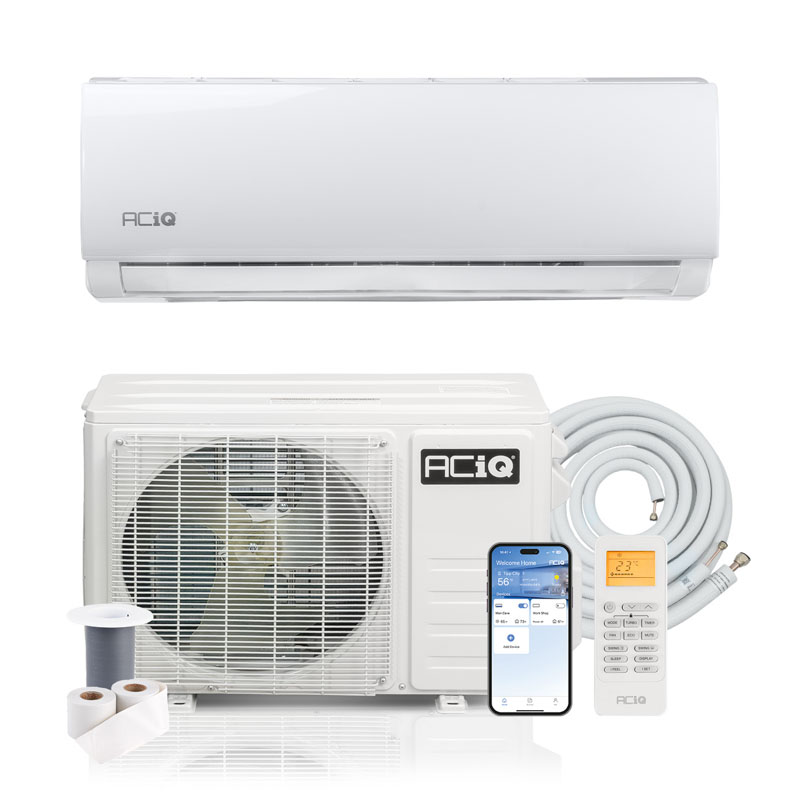
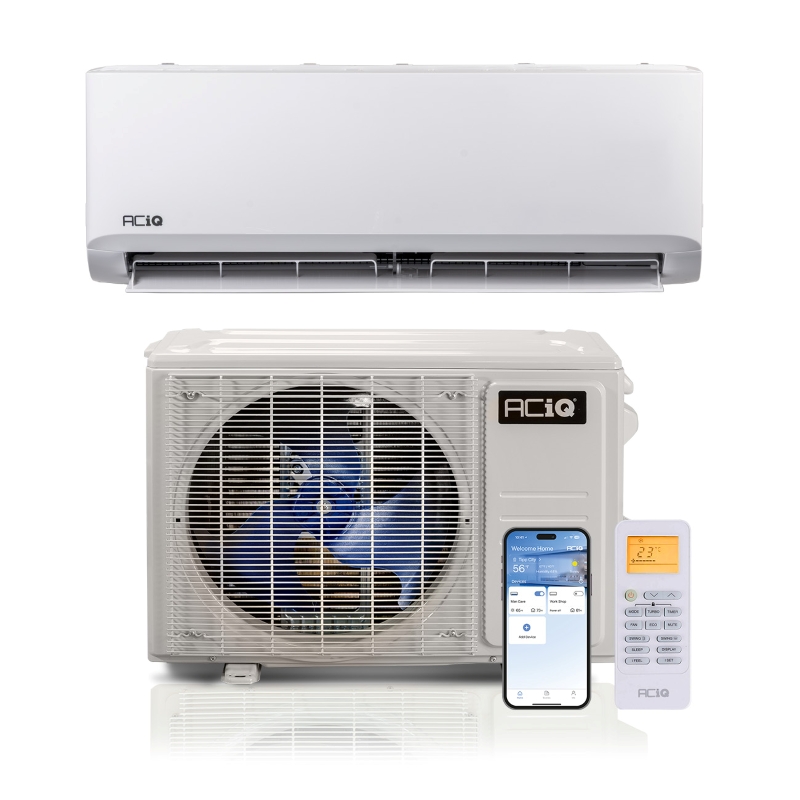
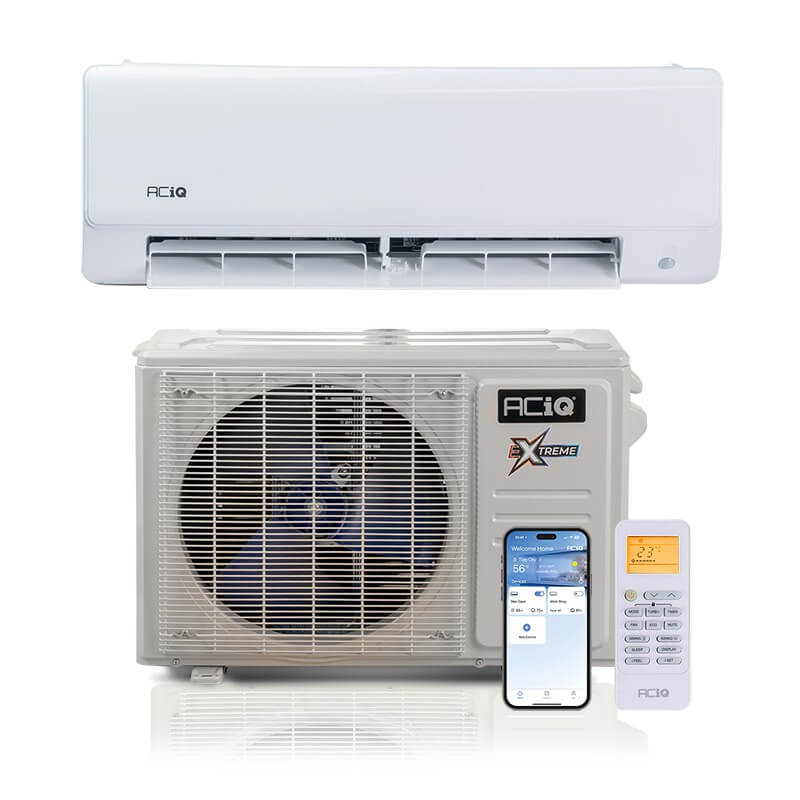
Looking for a quality mini split at a great price? ACiQ’s single zone air conditioner and heat pump systems provide a cost-effective way to heat and cool your space. With sizes ranging from 9,000 BTU to 60,000 BTU, you can find the right unit to perfectly heat and cool room additions, bonus spaces, garages, stand-alone workshops or any room in your home that needs a boost.
For more information check out our FAQs at the bottom of the page!


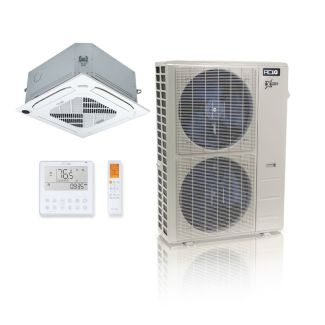



An ACiQ single zone mini split system is a high-efficiency, ductless HVAC system that pairs one outdoor condenser with a single indoor air handler to condition one room or designated area. Unlike some competing brands that offer cooling-only mini splits, every ACiQ single zone system is a heat pump, meaning it provides both heating and cooling from a single unit without the need for ductwork.
These systems work by moving refrigerant between the outdoor unit and the indoor air handler, absorbing heat from the room during cooling and releasing it outdoors, then reversing that process to pull heat from the outdoor air and deliver it indoors during heating. The compressor in ACiQ's inverter-driven system adjusts its output in real time to match the actual load in the space, keeping the room at a steady temperature while drawing only the energy the conditions require.
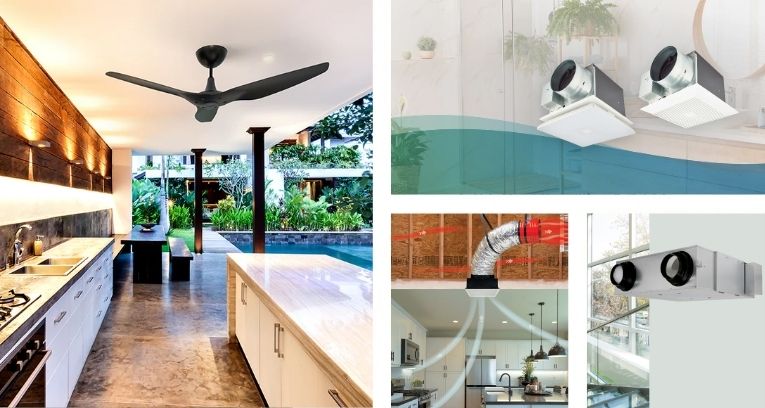

These systems are available in a wide range of BTU capacities and can heat and cool spaces that are up to 3,000 sq. ft. with good insulation and 8-foot ceilings. They’re best suited for spaces that don’t have any ductwork and need individual temperature control, such as the following:
Primary Bedrooms and Guest Rooms: Bedrooms are a great fit for ACiQ single zone mini splits because they benefit from individualized comfort settings. Homeowners can maintain their preferred temperatures without affecting the rest of the house. They can keep their bedroom at a comfortable temperature, and their guest room can be heated or cooled only when it is occupied, which helps improve overall energy efficiency.
Home or Commercial Offices: Offices often require different temperature settings than surrounding spaces due to computer equipment, lighting, and varying occupancy schedules. Using one of these mini splits for that space allows precise climate control, maintaining comfort and productivity throughout the workday without relying on the building's central HVAC system.
Home Additions or Bonus Rooms: Sunrooms, in-law suites, and finished bonus rooms can be tough to condition effectively because they're often too far from the central system or outside its original design capacity. A single zone ACiQ unit conditions these added spaces independently. This way, you don't have to disrupt and incur the cost of rerouting ductwork through finished walls.
Garage or Basement Conversions: Garages used as workshops, home gyms, or hobby spaces tend to have minimal insulation, concrete floors, and often no existing ductwork, making it impractical to extend the central system. A single zone ACiQ system can handle the higher load that those conditions create and can be sized accordingly without any connection to the home's existing HVAC system.
Detached Workshops and Backyard Sheds: Workshops, studios, she sheds, and man caves are ideal candidates for single zone mini splits because they operate independently of the main home. This means you can heat or cool them only when someone is using the space, improving comfort and saving money by avoiding the cost of conditioning unused areas.
Environmental factors such as poor insulation, leaky windows, high ceilings, excessive sun exposure, frequent door openings, and extreme outdoor temperatures can increase the heating and cooling load on these systems. If your space has one or more of these conditions, you may need a higher-capacity system or improvements to the home's efficiency to achieve optimal performance.
ACiQ 1 room mini split systems are available in capacities ranging from 9,000 BTU to 60,000 BTU, allowing them to heat and cool everything from small bedrooms to large open-concept living areas and light commercial spaces.
9,000 to 12,000 BTU (up to 600 sq. ft.): Found in ACiQ's Essentials, Standard, and Extreme single zone series, these systems are often installed in bedrooms, home offices, guest rooms, and small apartments. These systems use smart, variable-speed motors to maintain a perfectly steady temperature while lowering energy use. Depending on your needs, you can select a standard model or a cold-climate version built for extra-tough winters.
18,000 to 24,000 BTU (600 to 1,500 sq. ft.): This size range is popular for ACiQ single zone systems because it can effectively condition larger living rooms, finished basements, garage conversions, sunrooms, and open-concept spaces. Homeowners have options ranging from the budget-friendly Essentials series to the Standard and Extreme series. The Standard and Extreme models achieve SEER2 ratings over 20, while also providing strong heating performance in low outdoor temperatures.
30,000 to 36,000 BTU (1,250 to 2,000 sq. ft.): These systems suit large spaces, such as great rooms, large open floor plans, workshops, retail spaces, and restaurants. 36,000 BTU systems are available across the Essentials, Standard, and Extreme series. The 30,000 BTU capacity comes in select concealed duct and ducted single zone configurations.
48,000 to 60,000 BTU (2,000 to 3,000+ sq. ft.): Available in ACiQ's Extreme Series, these high-capacity systems are intended for very large residential spaces, workshops, churches, gyms, warehouses, event venues, and other commercial applications. These capacities are typically offered with concealed duct, floor mount, or ceiling cassette indoor units rather than wall mounted air handlers.
While higher-capacity single zone models are available, most homeowners who need more than 24,000 BTU often choose a multi zone system instead, especially when heating and cooling multiple rooms independently.
The total cost for buying and installing one of these ACiQ systems varies widely, typically ranging from $1,500 to $4,500, depending heavily on local labor rates and system capacity. Here’s a typical breakdown of the costs:
Equipment Cost: $500 to $3,000+, depending on the system’s capacity, series, efficiency, and air handler type. Essentials series systems in the 9,000 to 12,000 BTU range start around $500 to $1,200, Standard series units in the mid-BTU range generally run $900 to $2,000, and Extreme series systems at higher BTU sizes or with cold-climate capability typically fall between $2,000 and $3,000+.
Installation and Labor Cost: Professional installation for an ACiQ single zone system typically runs between $500 and $2,500+, depending on the complexity of the line set routing, the outdoor unit placement, and regional labor rates. You can lower the labor costs a bit if you handle some of the prep work, such as mounting, yourself.
Operation and Maintenance Cost: Monthly operating costs vary by BTU size, local electricity rates, and usage patterns, but are typically between $25 and $80. ACiQ filters are usually washable, meaning maintenance costs are relatively low aside from a $100 to $200 annual professional deep-cleaning.
If you want to make sure your system is fully protected, you need to invest in accessories such as line set covers, disconnect boxes, and surge protectors, which can add another $100 to $400+.
ACiQ does not offer DIY single zone mini split systems. All ACiQ mini splits are designed for professional installation to ensure the system is properly evacuated, commissioned, and covered under the manufacturer's warranty.
DIY Installation: ACiQ does not offer DIY single zone mini split systems. All ACiQ models require professional installation using traditional refrigerant line sets that must be vacuumed, pressure-tested, and commissioned with specialized HVAC tools. Attempting to install the system yourself may void the manufacturer's warranty and result in improper system performance.
Professional Installation: ACiQ single zone mini split systems require installation by a licensed HVAC professional. Proper installation includes mounting the indoor and outdoor units, connecting and evacuating the refrigerant line sets, pressure testing for leaks, charging the system as needed, and commissioning it before operation. Professional installation also helps ensure the system operates efficiently and maintains full warranty coverage.
In addition to HVAC installation, homeowners may also need licensed electricians to complete the dedicated electrical circuit and local permits, depending on local building codes. Having the system professionally installed helps ensure safe operation, code compliance, and long-term reliability.
These systems come in just about every air handler type available, including wall mount, floor mount, ceiling cassette, slim ceiling cassette, and concealed duct, to fit any space’s layout. Here are a few tips on when to choose each:
Wall Mount Indoor Unit: ACiQ's 1 zone wall mount units are a popular style across all three series, Essentials, Standard, and Extreme, and are available across many common residential BTU sizes. Wall mount units install high on an interior wall and are the default choice for most residential applications because of their straightforward installation and broad compatibility with ACiQ's outdoor condenser lineup.
Floor Mount Indoor Unit: ACiQ provides floor mount indoor units for one room applications when wall mounted installation isn't practical. Installed low on the wall, these units work well in rooms with knee walls, large windows, sloped ceilings, or renovation projects that have limited wall space.
Ceiling Cassette Indoor Unit: These are more available in select BTU sizes within the Standard series. They mount flush into the ceiling and distribute air in four different directions across the single space, making them great for open-concept rooms, commercial spaces, or any room where keeping the walls clear is a priority.
Slim Ceiling Cassette Indoor Unit: ACiQ also offers slim ceiling cassette indoor units for single zone systems. Their compact design fits between standard 16-inch-on-center ceiling joists, making them ideal for remodels or buildings with limited ceiling cavity space while maintaining a nearly flush appearance.
Concealed Duct Indoor Unit: ACiQ concealed duct air handlers allow a single zone system to serve a single room or open area through short duct runs while remaining completely hidden above the ceiling or inside a soffit. Only the supply and return grilles are visible, giving the appearance of a traditional central HVAC system with the efficiency of a mini split.
In terms of overall popularity, ACiQ wall mount single space units are by far the most popular and widely used, while slim ceiling cassette units are the least popular, often reserved for highly specific, constrained renovation applications.
Single zone ACiQ mini splits require the correct voltage, a dedicated electrical circuit, properly sized wiring, an appropriately rated breaker, and an outdoor disconnect box. The specific electrical requirements will vary by model, but here are a few general guidelines:
Voltage: Some ACiQ systems for one space that range from 6k to 12k BTU can operate on standard 115V, while specific 12k units and usually all 18k to 60k BTU systems require 208/230V, single-phase, 60Hz power. The voltage rating must exactly match the nameplate specifications of your specific outdoor condenser model.
Amperage and Breaker Size: Minimum circuit ampacity (MCA) ranges from 10 to 30 Amps, and maximum fuse/breaker sizes range from 15 to 45 Amps, depending on the BTU capacity. For example, an 18k BTU system typically uses a 20 to 25 Amp breaker, while a 36k to 60k BTU system requires a 35 to 50 Amp breaker. Check your system’s nameplate for specific requirements.
Disconnect Box: An external, weatherproof disconnect box must be installed within sight of the system’s outdoor condenser unit to safely cut power. This box should be rated to handle the breaker size, between 15 and 60 Amps, as listed on your specific system’s nameplate.
Dedicated Circuit: Every ACiQ single zone system requires its own dedicated circuit running from your main electrical panel. Sharing this circuit with other household appliances can cause voltage drops and breaker tripping.
Wiring: For the connecting wire between the outdoor and indoor units, a 14 AWG 4-conductor unshielded or stranded wire is typically required to transmit both line voltage and communication signals. Wire size can vary, so check your specific model’s needs and local regulations before installing.
Although the guidelines above cover the typical electrical requirements for ACiQ single zone systems, the minimum circuit ampacity (MCA) and maximum overcurrent protection (MOCP) listed on your outdoor condenser's nameplate always take precedence. These values determine the minimum wire size and the largest allowable fuse or circuit breaker for your specific model, ensuring the system is installed safely and in accordance with the National Electrical Code (NEC) and manufacturer requirements.
ACiQ 1 room units have SEER2 ratings ranging from 17 to 28, making them highly energy efficient. The Essentials series starts at 17 SEER2, the Standard series reaches up to 25 SEER2, and the Extreme series tops out at 28 SEER2 on select models. This is well above the current federal minimum efficiency standard of 14 SEER2. Because every ACiQ single zone system utilizes an inverter-driven compressor that modulates output rather than cycling on and off at full power, the real-world energy savings are often greater than the SEER2 rating alone suggests.
ACiQ single zone mini splits are usually manufactured by Midea, a major Original Equipment Manufacturer (OEM) partner that also makes equipment for numerous well-known heating and cooling brands, and sold under the ACiQ brand. The idea behind ACiQ is to provide homeowners and contractors with affordable access to high-efficiency inverter and heat pump technology. The brand is supported through U.S.-based customer service, parts availability, and technical support.
No, ACiQ does not manufacture DIY single zone mini split systems. All ACiQ mini split systems, including the Essentials, Standard, and Extreme series, require installation by a licensed HVAC professional. Professional installation includes evacuating and pressure-testing the refrigerant lines, commissioning the system, and verifying proper operation to maintain warranty coverage and ensure long-term performance.
Standard and Extreme ACiQ mini split systems typically include a 12-year compressor warranty and 7-year parts warranty when registered online within 90 days of installation. If the system is not registered, coverage typically defaults to a 5-year compressor warranty and 5-year parts warranty. Essentials systems carry a 6-year compressor warranty and 4-year parts warranty. Because warranty coverage varies by product series and model, always verify the specific warranty for the system you're purchasing.
Yes, pretty much every ACiQ 1 zone system is a heat pump, meaning it can both heat and cool using the same outdoor unit by reversing the refrigerant cycle as the seasons change. Most models can maintain rated cooling performance in outdoor temperatures up to approximately 115°F and continue providing heat in temperatures as low as 5°F for Standard Series systems and -22°F for Extreme Series systems. This makes ACiQ mini splits suitable for both hot summer climates and severe winter conditions where conventional heat pumps often struggle.
These systems usually last about 15 to 20 years with regular cleaning and maintenance. Some higher-efficiency systems with inverter technology can even last up to 25 years due to reduced wear. They have Gold Fin® anti-corrosion coating on the outdoor condenser coils as well to prevent wear from the weather.
ACiQ 1 room mini splits are designed for quiet operation, with indoor units typically operating between 19 and 40 dB(A), depending on the model and fan speed. At their lowest settings, many indoor units are quieter, and some models include Sleep or Mute modes that further reduce noise during nighttime operation. Outdoor condensers typically operate between 50 and 60 dB(A), roughly equivalent to a normal conversation, and feature anti-vibration and quiet compressor technology to minimize noise and ensure a peaceful environment.
Humidity gets removed automatically when the system cools. Warm, humid air passes over the cold indoor coil, and the moisture condenses and drains away. Many single zone mini split systems, like the Standard and Extreme Series, have a Dry Mode that focuses on removing moisture without changing the temperature much. You can stay comfortable and avoid that damp feeling without running the AC at full cooling.
To keep one of these systems running smoothly, clean the washable air filter every two to four weeks during regular use and more often in homes with pets or excessive dust. Most ACiQ indoor units are designed for easy filter access, allowing homeowners to remove the filter, rinse it with water, allow it to dry completely, and reinstall it in just a few minutes. The outdoor condenser should also be inspected every few months and cleared of leaves, grass clippings, dirt, and other debris that could restrict airflow and reduce efficiency. In addition to routine homeowner maintenance, annual professional service is recommended to inspect the coils, refrigerant system, condensate drain, and electrical components.
An ACiQ single zone mini split is designed to only heat and cool one room or space. That said, if you have an open-plan layout where two smaller spaces are connected without doors, walls, or other obstructions blocking airflow, a well-placed single zone unit might be able to adequately serve both. However, do not try to stretch the use of the system past what BTU capacity and square footage it is rated for. If you have multiple independent, enclosed rooms that you need to heat and cool, an ACiQ multi zone mini split is the better option.