Your cookie preferences
We use cookies to remember your preferences and understand how shoppers use our site, helping us improve your shopping experience.
Read our privacy policy
Efficiently heat and cool two spaces with Daikin's quiet, energy-saving dual zone mini splits. Perfect for bedrooms, basements, and living areas, these systems offer flexible installation, smart home compatibility, and customizable comfort. Explore Daikin's dual zone options to find the ideal solution for your needs.
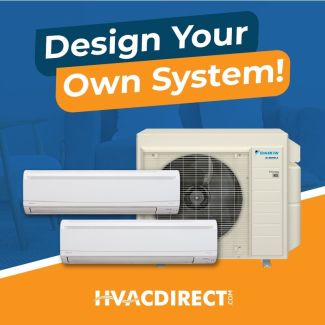
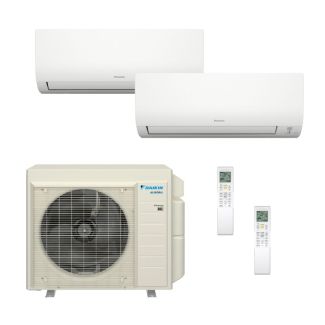
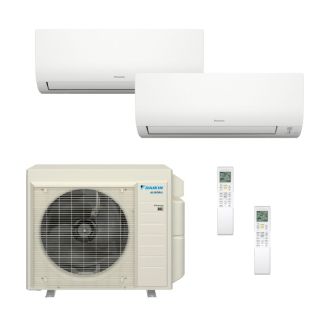
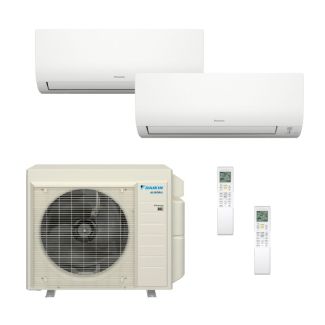
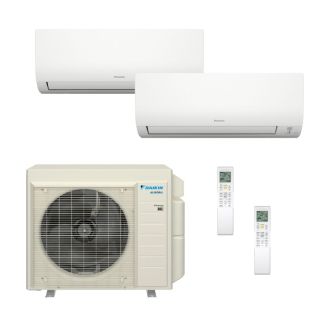
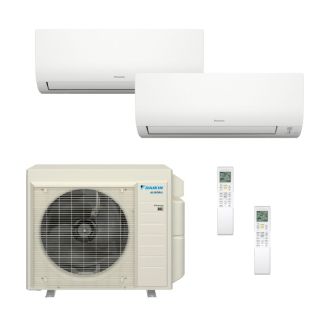
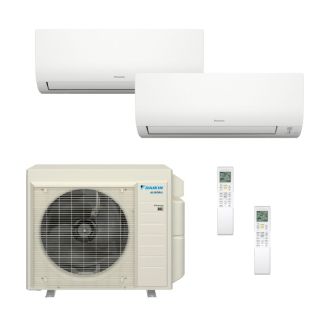
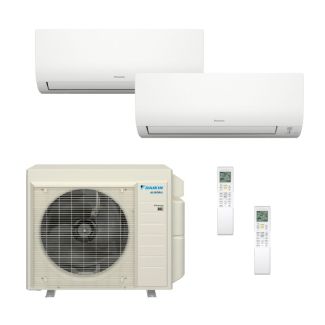
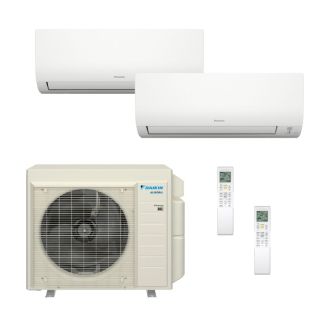
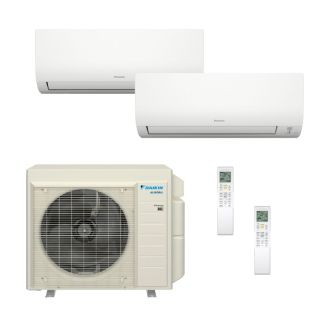
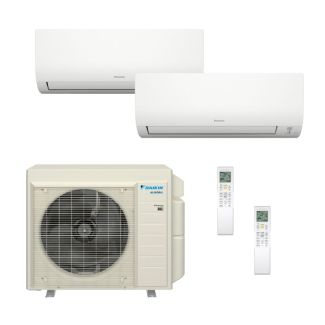
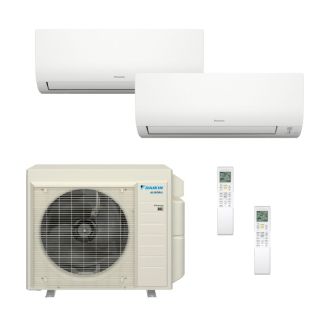
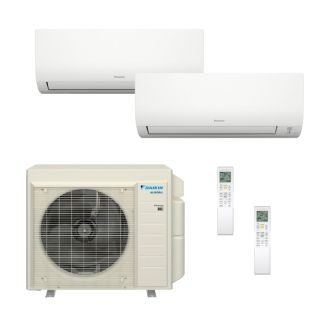
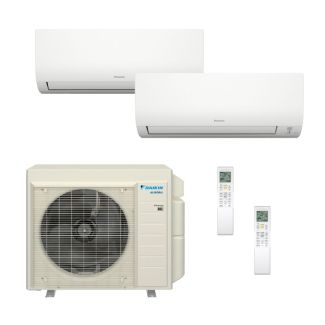
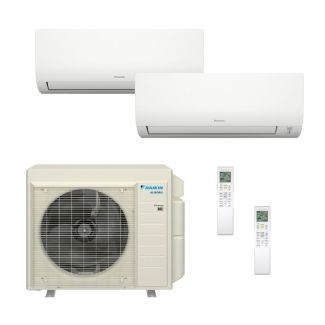
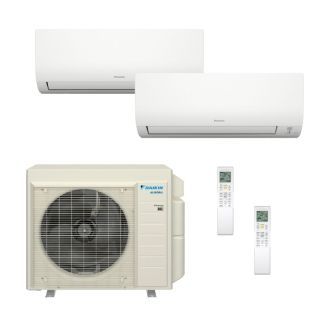
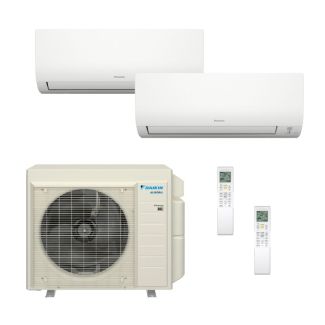
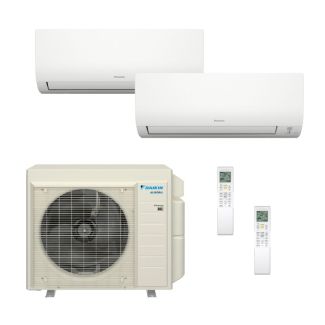
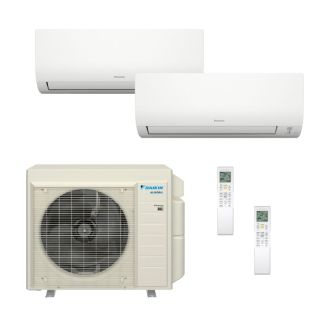
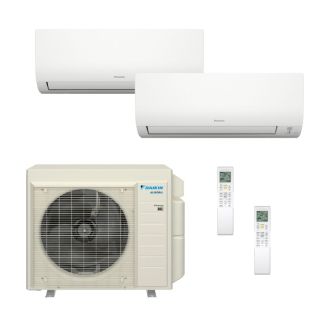
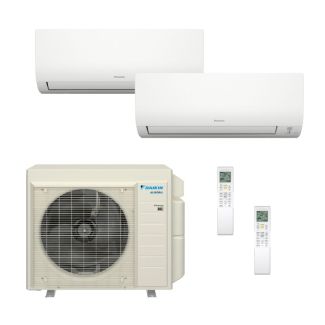
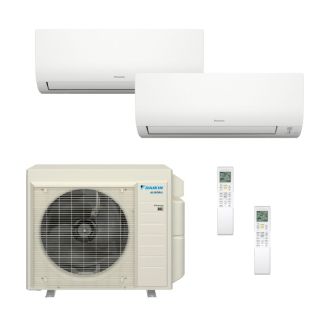
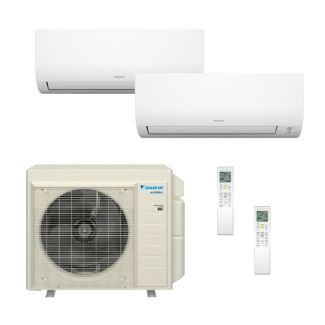
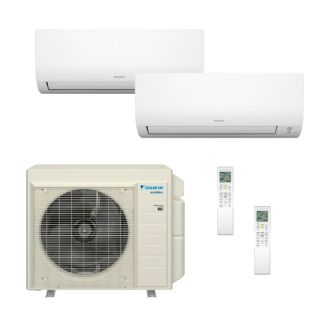
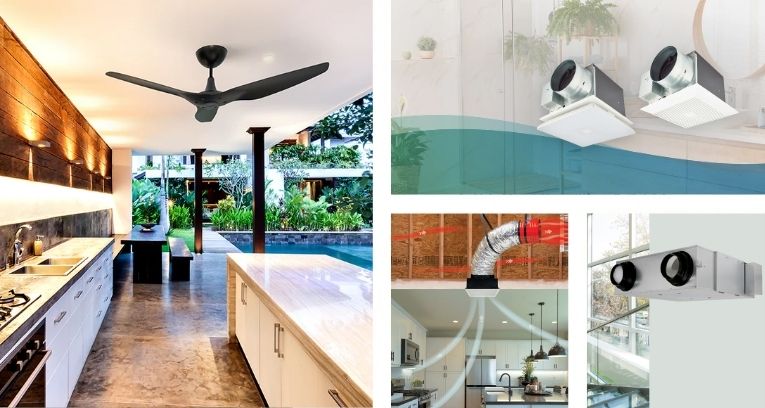

Daikin 2 zone mini split systems are ductless heating and cooling systems that connect two indoor air handlers to one outdoor condenser. These systems let homeowners set different temperatures in two rooms, such as a bedroom and a home office, without ductwork. These systems work by circulating pressurized refrigerant directly between the outdoor condenser and the indoor blowers through a pair of dedicated copper line sets, allowing each zone to be heated or cooled directly without ductwork.
These dual zone systems are ideal for properties with standard wall insulation, standard 8- foot ceilings, and a total combined area between 600 and 2,000 square feet divided across two distinct living zones. Variable-speed inverter technology helps maintain even temperatures in homes without practical ductwork.
Finished Basements: A dual zone setup balances the naturally cool, damp air of a lower level by managing the humidity and temperature independently from the main floor. Some Daikin models include Flash Streamer Technology, which may help reduce odors and airborne particles in enclosed spaces.
Bonus Rooms Above Garages: These isolated areas experience extreme seasonal temperature swings, because they sit over unconditioned spaces and require dedicated climate adjustments. Daikin dual zone mini splits complement such spaces very well.
Home Additions: New structural extensions, such as sunrooms or guest bedrooms, receive targeted heating and cooling from Daikin dual zone systems without forcing the existing, primary central HVAC system to undergo capacity overextension.
Primary Bed and Bath Suites: This 2 zone configuration allows for personalized overnight comfort settings in the sleeping area while maintaining a stable temperature in the adjacent room. The Daikin Intelligent Eye Sensor, detects occupancy and automatically adjusts operation to reduce energy use when the room is empty.
Duplex Apartments: Independent multi-family layouts benefit from separated zone controls that match the specific daily occupancy patterns and individual preferences of the tenants, specifically in bedrooms.
Extreme outdoor temperatures below -4ºF, high structural wind exposure, and unsealed air leaks around windows can significantly reduce the heating and cooling performance of these multi zone configurations, depending on model and specific environments. Some low-temperature Daikin models, such as Atmosphera and Aurora, are rated for heating in subzero conditions.
Daikin 2 zone mini split systems are available in multiple condenser sizes, including 18,000, 24,000, and 36,000 BTU configurations to accommodate different residential layouts. These capacities let homeowners match different indoor unit sizes to the load in each room.
18,000 BTU (600 to 1,000 sq. ft.): Small residential zones such as dual compact bedrooms or paired home office spaces.
24,000 BTU (1,000 to 1,500 sq. ft.): Mid-sized environments including a primary bedroom suite connected to an attached nursery.
36,000 BTU (1,500 to 2,000 sq. ft.): Large multi zone spaces like an expansive open-concept living room combined with a multi-car garage.
Selecting the ideal condenser capacity ensures that both connected rooms receive adequate heating and cooling output during peak seasonal weather extremes. Indoor unit sizes vary by model and should be matched to each room’s load.
Daikin dual-zone systems typically cost $3,500 to $6,600+ before installation, depending on the total BTU capacity, system efficiency rating, and specific structural installation needs. Total cost includes equipment, installation, and maintenance.
Equipment Cost: A complete Daikin dual zone equipment package typically costs between $2,600 and $6,600+, depending on whether you choose an 18,000 BTU, 24,000 BTU, or 36,000 BTU multi zone configuration.
Installation and Labor Cost: Professional installation costs range from $800 to $2,500 while certified technician labor costs individually run between $500 to $2,000, depending on the complexity of the electrical service upgrades and line set routing.
Operation and Maintenance Cost: Monthly electrical operation costs usually range from $30 to $90, depending on local utility rates, while professional annual maintenance costs individually average between $100 and $350 for deep coil cleanings.
Homeowners should also budget an additional $100 to $400 for critical accessories such as outdoor condenser mounting brackets, protective plastic line set covers, and elevated composite equipment pads.
No, you should not self-install a Daikin 2 zone mini split system yourself, because Daikin does not make DIY systems. Daikin multi zone systems require professional installation. Attempting a DIY installation on a standard Daikin system can void the manufacturer's warranty and can result in severe mechanical malfunction.
DIY Installation: Daikin does not make DIY mini splits, therefore DIY installation is not possible for Daikin units without the possibility of severe consequences, like electrical hazards from unprofessional connections and code compliance fines.
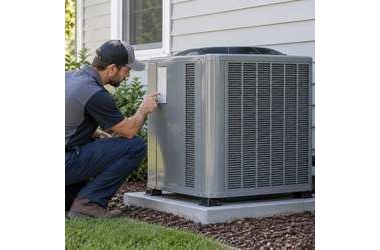
Professional Installation: A certified technician must perform the critical technical steps including high voltage 230V electrical wiring, vacuuming and flaring the copper lines, and releasing the refrigerant. It is generally better to use a Daikin Comfort Pro or Asure Dealer for added benefits for pro Daikin installs.
Local permits are often required, and requirements vary by jurisdiction. For a Daikin dual zone setup, a dedicated 230V electrical circuit must be run directly from your main panel, and refrigerant work must be performed by an appropriately EPA-certified technician to charge and commission this specific brand and multi zone system type.
Daikin 2 zone systems let homeowners choose different indoor unit styles for each room. Specifying the exact equipment type upfront ensures balanced air circulation and preserves the interior aesthetic of the home.
Wall Mount Units: Standard indoor air handlers like wall mounts install high on residential walls to optimize real estate while distributing conditioned air evenly throughout the room.
Ceiling Cassette Units: Ceiling cassette units are to be installed for a low-profile look, while delivering a balanced 4-way directional airflow pattern across wider, open space layouts.
Concealed Duct Units: These compact, hidden, ducted systems fit discreetly inside ceiling plenums or crawl spaces to supply conditioned air through localized duct runs and subtle grilles.
Floor Mount Units: Specialized low profile air handlers like floor mounts rest near the floor line to accommodate spaces with restricted wall heights or sloped ceilings.
Homeowners can often mix indoor unit styles, subject to system compatibility. However, it is important to evaluate structural constraints like overhead clearance, ceiling joist spacing, and weight load thresholds before making final selections of indoor equipment. Poor placement can reduce airflow, comfort, and overall system performance.
Every dual zone outdoor condenser requires a dedicated, single phase power supply routed through an exterior electrical disconnect switch located within sight of the equipment. These mini split systems operate on highly specific electrical specifications that must be met to ensure safe, stable operation and to maintain product warranty compliance.
Operating Voltage: Daikin dual zone outdoor condensers require a steady 230V electrical supply to properly power the variable speed inverter compressor and the outdoor fan motor.
Minimum Circuit Ampacity (MCA): The electrical supply lines running from the main breaker panel to the outdoor unit must be rated for a minimum of 15A to 21A, depending on the total BTU output of the system.
Maximum Overcurrent Protection (MOP): Homeowners must install a dedicated 20A or 25A double pole circuit breaker inside the main electrical panel to safely guard against electrical surges or system overloads.
Indoor Unit Wiring: The indoor air handlers do not connect to a wall outlet. Indoor units are typically powered and controlled through wiring connected to the outdoor unit, but exact requirements vary by model.
Installing the wrong breaker size or undersized wiring can cause voltage drops, equipment damage, and fire risk. Electrical requirements may vary by model.
Yes, Daikin 2 zone mini split systems are highly energy efficient, as these dual zone configurations deliver seasonal energy efficiency ratio ratings up to 21 SEER2 and heating seasonal performance factor ratings up to 10 HSPF2, which can improve efficiency compared with fixed-speed systems. They also utilize variable speed inverter compressors that constantly adjust motor speed to match each room’s heating and cooling demand instead of cycling completely on and off. This control can help reduce energy waste, especially in homes that would otherwise need ductwork.
Daikin 2 zone systems are manufactured by Daikin Industries Limited, a global heating and cooling company headquartered in Osaka, Japan. The specialized dual zone residential equipment packages distributed through these ecommerce platforms are engineered by this global manufacturer and assembled across their network of international production facilities, including their massive 4.2 million square foot Daikin Comfort Technologies campus located in Waller, Texas.
No, Daikin does not manufacture true DIY 2 zone mini split systems that feature pre-charged line sets or quick-connect installation fittings. Most Daikin dual zone systems require professional line-set installation, pressure testing, and evacuation that must be physically cut, flared, pressure tested with nitrogen, and evacuated using a professional vacuum pump by a licensed professional installer.
Daikin systems may qualify for up to a 12-year parts limited warranty when registered, depending on the product and location. Daikin Comfort Pros are factory-trained installers who can register your equipment for Daikin's 12-Year Parts Limited Warranty. The ASURE Extended Service Plan may add labor coverage and extended parts coverage, depending on the plan selected.
Yes, Daikin dual room mini split systems provide both high-efficiency heating and air conditioning from a single outdoor heat pump condenser. The variable-speed inverter compressor modulates the flow of refrigerant to move heat indoors during winter and reverse the process in summer.
A properly maintained Daikin 2 zone mini split often lasts 15 to 20 years. With excellent maintenance, some units may last 25 years or longer.
Many Daikin indoor units operate at very low sound levels. They utilize an advanced aerodynamic fan blade design and a variable-speed inverter compressor that eliminates the harsh noise spikes of traditional single-speed motors. The indoor wall mount air handlers operate at ultra-low sound levels ranging between 19 and 22 decibels, which is equivalent to a soft whisper or rustling leaves.
Yes, Daikin 2 zone mini split systems can effectively dehumidify indoor spaces by using a dry mode on the indoor units. Dry mode helps remove moisture from the air with less cooling than normal operation, dropping the indoor coil temperature below the room's dew point to extract moisture from the air without over-cooling the living space.
Clean reusable filters about every 2 weeks, or more often in dusty conditions. In addition to this bi-weekly filter rinse, the exterior aluminum coils on the outdoor condenser unit and the internal blower wheels of the indoor units should be inspected and cleaned annually, especially if it is used heavily. Dirty filters can reduce airflow, lower capacity, and raise energy use and monthly electricity bills.
A Daikin 2 zone mini split system can heat and cool two separate rooms or distinct living zones using two independent indoor air handlers connected to a single outdoor condenser. Each indoor unit operates on its own dedicated thermostat, allowing homeowners to set different target temperatures in both spaces or completely turn off conditioning in an unoccupied room to save energy. Homes that need more than two zones usually require a 3-, 4-, or 5-zone system.


