Your cookie preferences
We use cookies to remember your preferences and understand how shoppers use our site, helping us improve your shopping experience.
Read our privacy policy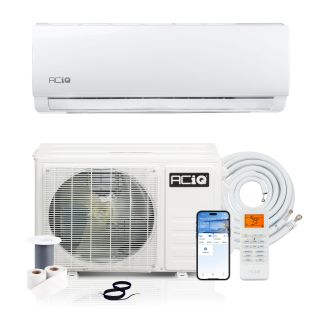


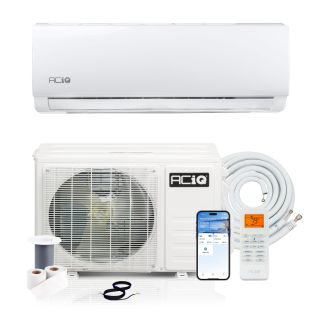
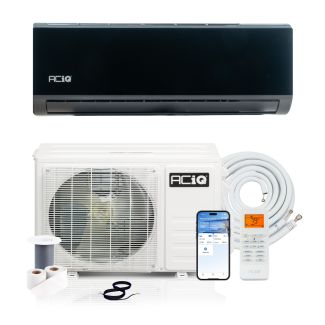
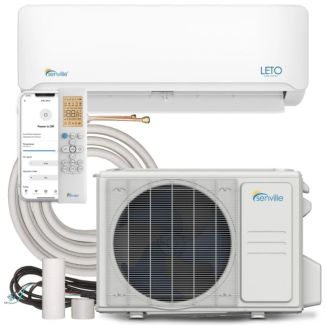

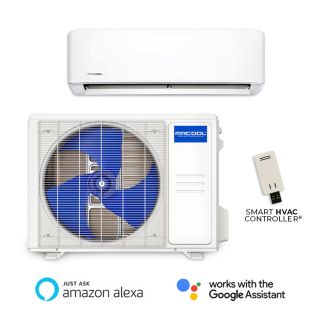
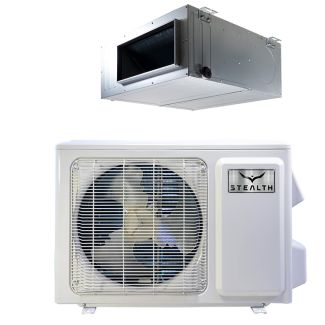


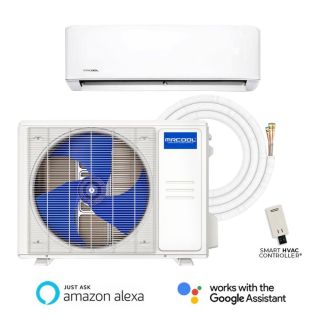
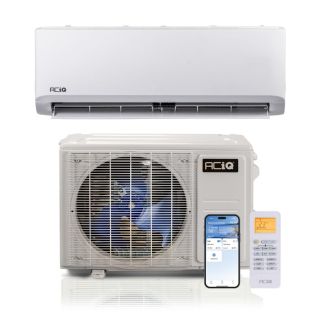

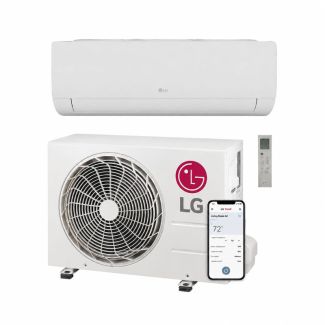
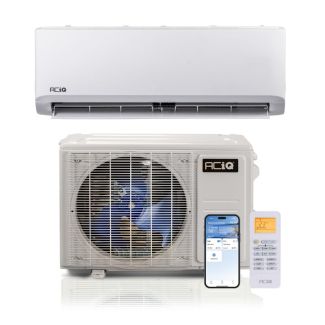
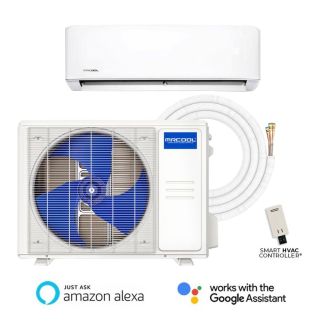
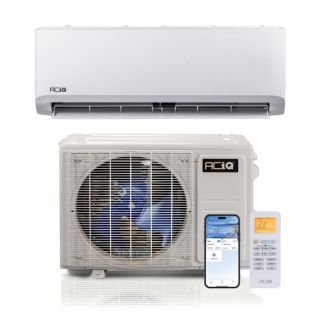
Garage mini splits are ductless air conditioning systems made up of a single outdoor condensing unit and one or more indoor air handlers, also known as heads, that provide air in zones where ductwork is absent or inefficient to run. Garage units that are heat pumps can cool and heat those dedicated spaces by circulating refrigerant through connected lines that run between the outdoor unit and the indoor head(s). Through the refrigerant-charged lines, heat is transferred in and out of the garage space to create desired temperatures. In systems equipped with variable-speed inverter technology, the outdoor condensing unit continuously controls the heat transfer process, creating consistent temperatures on command and minimizing electrical output and energy consumption.
Mini splits in garages eliminate the need for ductwork, reduce energy costs by up to 30% through independent zone control, and provide year-round heating and cooling from a single compact system.
No Ductwork Required: The primary reason for garage mini split popularity is that these systems deliver the availability of both AC and heat without the need for ductwork, which is less responsive and efficient than mini splits.
Independent Temperature Control: The zone control of a mini split allows garages to receive AC and heat independently from the homes to which they are attached, reducing overall energy usage for homeowners. Mini splits also can be turned off when no one is present in the space.
High Energy Efficiency with Inverter Technology: Advanced mini splits utilize inverter technology that modulates compressor motor speeds continuously, matching the precise thermal load of the garage to maximize efficiency and maintain stable temperatures.
Single System Heating and Cooling: Able to provide year-round heating and cooling from a single ductless system, garage mini split heat pumps can replace portable heaters, fans, and window ACs that function as either heating-only or cooling-only units.
Compact, Space-Efficient Installation: Because their wall and ceiling mounting flexibility helps to preserve vital floor space, mini split systems for garages are valuable in compact or irregularly shaped workshops, vehicle storage areas, and multi-purpose garage spaces.
While traditional space heaters and window AC units struggle to regulate uninsulated zones, ductless mini splits eliminate the 20% to 30% energy loss typical of ducted systems, offering an efficient, long-term climate solution.
A mini split should not be installed in a garage that lacks basic R-13 wall insulation, has permanent air gaps, or is occupied less than 5 hours per week, as the upfront investment will not be recovered. Garages used less than a few hours per week are generally not cost-effective candidates for mini split installation, as the upfront investment ($1,000 to $7,500) won't be offset by energy savings or comfort improvements. Concerning safety, without access to a dedicated 115V or 230V circuit, a mini split cannot be safely installed or operated in the garage. Ultimately, uninsulated or rarely occupied spaces fail to yield an acceptable return on investment; however, if a drafty garage must be conditioned, a mini split remains significantly more efficient than a window unit or portable heater.
Fully finished garages, detached workshops, and converted garage spaces with adequate insulation and sealed enclosures are the best candidates for mini split systems.
Finished Garages: Mini splits pair well with fully-finished, well-insulated garages that lack connection to central ductwork. Garages with drywall, sealed doors, and basic insulation help garage AC systems run at high efficiency.
Detached Garages: Standalone structures, such as detached garages, that lack access to central heating work well with mini splits.
Garage Workshops or Hobby Spaces: Garages used as workshops, gyms, or studios are excellent candidates because mini splits provide quiet, consistent heating and cooling that can keep up with heat from tools, workouts, or equipment while maintaining comfort.
Converted Garages: Spaces transformed into home offices, gyms, or workshops benefit from dedicated climate control without placing an extra load on the home's primary central system.
Before purchasing, homeowners must evaluate localized environmental factors. System performance can drop by 20% to 40% if the space experiences frequent overhead door cycling, uninsulated garage doors, or ambient outdoor temperatures exceeding operational limits (typically below -15°F or above 115°F). These conditions can reduce system efficiency by 20 to 40% and may require higher-capacity units or insulation upgrades to maintain effective performance.
Depending on the system type and the garage’s electrical and structural complexity, a homeowner can install a mini split system in a garage either as a DIY project or through a professional installer. DIY-rated systems and professionally installed systems differ significantly in cost, safety requirements, and warranty coverage.
DIY Garage Installation: DIY mini split systems are designed for single zone and multi zone use and come with pre‑charged line sets that eliminate the need for refrigerant handling. DIY installation is a popular choice for garages with simple layouts, easy wall access, and existing electrical capacity to add a dedicated circuit without panel upgrades. However, all electrical work and evaluation require a professional to oversee the connection safety.
Professional Garage Installation: Unlike DIY installation, pro garage installation requires refrigerant handling that homeowners are not authorized to work with, which removes the burden of duty from the homeowner, but a higher overall monetary cost. Professional oversight for electrical and evaluation is also a necessary component of pro installs.
Because most municipalities classify these systems as permanent structural additions, obtaining both electrical and mechanical permits from a local building department is mandatory prior to installation. Permit fees typically range from $50 to $300.
A garage mini split air conditioner typically costs between $1,000 and $7,500, with the total price driven by system type, installation complexity, and long-term energy use.
Equipment Cost: Garage-appropriate single zone mini split systems generally range from $650 to $4,500 for equipment only, depending on brand, efficiency tier, and heating capability. Very large garages or barns could require a dual zone system, which would increase the cost. Air handler type also affects cost.
Installation and Labor Cost: Installation and labor costs range from $500 to $1,000 for straightforward professional installations. Complex projects requiring electrical panel upgrades, long line set runs, or structural modifications can push total installation costs up to $1,000 to $2,000 per zone.
Operation and Maintenance Cost: Annual single-visit maintenance costs for tune-ups usually fall between $75 and $300, depending on the size and operating condition. Homeowners who opt for semi-annual preventative maintenance plans should budget $150 to $300 annually. Newer mini splits from LG and ACiQ are designed for self-cleaning, so outside maintenance is less necessary. Separately, monthly energy bills regarding garage mini splits are typically in the $25 to $100 range.
In many jurisdictions, electrical and mechanical permits are required when installing a garage mini split, so permit fees and inspections should be factored into the total project cost. Failure to account for required electrical and mechanical permits can lead to municipal fines and voided equipment warranties, making code compliance a critical factor in overall budget.
For the best combination of installation ease, cost, airflow, and performance, wall-mounted air handlers are the top choice for garages and multi-purpose utility spaces.
Wall Mount Mini Split Indoor Unit: Wall mounts are ideal for single zone spaces like garages, because they install high on the wall, avoid floor interference, and deliver strong, directional airflow across open garage spaces. Wall consoles also trend as less expensive than other air handler options.
Ceiling Cassette Mini Split Indoor Unit: Standard and slim ceiling cassette units provide even, four-way airflow and work well in garages with either finished or unfinished ceilings, especially when wall space is obstructed by shelving, vehicles, or equipment.
Floor Mount Mini Split Indoor Unit: Because garages with very low ceilings or restricted wall height can make wall mounted installation impractical, floor mounted mini splits are well-suited for these situations. Floor mounted heads can be installed low on walls near floor baseboards, and they can also be mounted higher on walls or even ceilings if they are universal handlers.
Concealed Duct Mini Split Indoor Unit: Concealed duct units provide adequate airflow in customized or converted garages that have specialized features like existing ductwork.
Avoid ceiling cassettes or concealed duct systems in unfinished or uninsulated garages, as high structural heat gain through the roof plane will severely diminish system efficiency.
Garage mini split systems require a dedicated electrical circuit matching the unit’s voltage, ampacity, and overcurrent protection ratings as specified by the manufacturer. Garage mini split installations must meet the same electrical standards required for permanent HVAC installations in any residential or commercial structure.
Dedicated Circuit: A garage mini split must be connected to its own dedicated circuit, not shared with outlets, lighting, or tools to prevent voltage drops, nuisance tripping, and compressor damage.
Correct System Voltage (115V or 230V): Most higher‑capacity and heat‑pump‑equipped garage systems require 230V service. While compact 9,000 BTU systems may operate on standard 115V lines, typical garage heat pumps require a dedicated 230V circuit, depending entirely on available breaker space in your main electrical panel.
Appropriate Breaker and Wire Sizing: Breakers and wire gauge must be selected in accordance with manufacturer‑listed electrical specifications, as incorrect breaker sizing can shorten equipment lifespan and result in failed inspections.
Outdoor Disconnect: Garage mini split installations require a local electrical disconnect within sight and close proximity of the outdoor condensing unit for servicing and safety and is commonly enforced by electrical code.
Following the unit's Minimum Circuit Ampacity (MCA) and Maximum Overcurrent Protection (MOP) ratings are critical for selecting the correct wire gauge and breaker size. Inspectors will verify that these specifications match manufacturer requirements to ensure code compliance and system safety.
Because of the typical footprint and heat‑gain profile of a standard one‑ to two‑car garage, 12,000 BTU mini splits are considered the best BTU size by default. Twelve thousand BTU garage systems are common starting points for enclosed, single zone garage spaces, but larger garages with significant airflow loss or minimal insulation typically require higher-capacity BTU units.
9,000 BTU (300 to 450 sq. ft.): Best for small, enclosed one‑car garages or utility garages with limited door openings and decent insulation that experience intermittent usage.
12,000 BTU (450 to 650 sq . ft.): The most common choice for standard one‑car garages and many attached two‑car garages that are insulated, which typically covers about 500 to 600 square feet under average conditions.
18,000 BTU (650 to 900 sq. ft.): Ideal for larger two‑car garages, garage workshops, or detached garages with higher ceilings or greater air leakage, while providing extra air capacity to overcome issues from weak insulation and outdoor exposure.
24,000 BTU (900 to 1,200 sq. ft.): Twenty-four thousand BTU systems are common where smaller units would be underpowered and struggle to maintain stable temperatures in larger spaces, such as oversized garages or three‑car garages. Converted workshops, gyms, and studios also benefit from 24,000 BTU systems due to heat gain from occupant activity, exercise, and frequent door openings that introduce outdoor air.
Undersizing leads to nonstop runtime, poor temperature control, and premature wear, while oversizing causes short‑cycling, humidity problems, and higher energy costs, so choosing the correct size is important.
Garages are typically cooled and heated as a solitary, enclosed space for dedicated, independent temperature control, making single zone systems the most common and recommended mini split zone configuration. Installing ducted HVAC into garages is often impractical, expensive, and complex, making mini splits a more effective choice.
Single Zone Garage Mini Splits: For a garage that requires independent control without affecting the home’s main heating and cooling system, a single zone setup is the most cost‑effective, easiest to install, and most energy‑efficient option.
Multi Zone Garage Mini Splits: For garages split into separate areas for work or leisure, such as a workshop and converted office or studio, multi zone systems best serve multiple spaces with multiple indoor units for independent climate control.
Opt for a single zone system to secure maximum electrical efficiency and minimize hardware expenses, unless your garage layout is physically divided by permanent partition walls. However, installing a multi zone system may be necessary to satisfy subdivided garage areas.

No, garage mini split systems are not loud, they are considered one of the quietest heating and cooling options for garage spaces and are designed for low‑noise operation in the low‑to‑mid 30‑decibel range, which is quieter than normal conversation.
The labor cost for a standard installation of a garage mini split typically ranges from $1,200 to $3,000, depending on installation complexity and local labor rates. Basic single zone installations average $1,200 to $1,500, while complex projects requiring electrical upgrades, long line set runs, or structural modifications can reach $2,500 to $3,000. DIY installations are $0, as they are totally the responsibility of the homeowner or purchasing client.
Carrier offers high‑efficiency garage single zone mini splits, MRCOOL is known for DIY‑friendly mini split systems, and Mitsubishi mini splits are considered premium for extreme reliability and very quiet performance. For best value, ACiQ is one of the most popular choices for high‑efficiency garage AC systems.
Yes, mini split systems work very well in both 2‑car and 3‑car garages, as long as the system is properly sized for the space’s square footage and insulation level. A 2‑car garage often requires a 12,000 to 18,000 BTU single zone mini split, and a 3‑car garage usually needs a 24,000 to 36,000 BTU single zone mini split.
Yes, Mitsubishi makes highly reliable mini split systems, with ultra‑quiet operation and high efficiency ratings that contribute to longer system lifespan and better performance. Additionally, Mitsubishi garage‑appropriate systems commonly feature inverter‑driven compressors, which modulate output instead of cycling on and off, reducing wear on components and improving temperature stability.
Yes, single zone mini split systems are ideal for garages, since they are designed to heat and cool enclosed areas without ductwork and provide consistent temperature control independent from the home’s central HVAC system. Some models are designed to heat in temperatures well below freezing while also maintaining full cooling capacity in extreme heat, making them effective for detached or lightly insulated garages that experience significant seasonal temperature swings.
Yes, you can use a DIY mini split system in a garage, as long as the system is designed for DIY installation and the garage layout is straightforward. DIY systems work best in garages that are single, open spaces, allow short and direct line‑set runs, and already have, or can easily add, a dedicated electrical circuit.
Yes, a mini split can dehumidify a garage effectively, especially when humidity control is tied to active cooling or when the system’s dedicated dehumidification mode is used. Brands like ACiQ implement what is called “Dry Mode”, which enables the unit to operate specifically as a dehumidifier, removing excess moisture from the air without aggressively lowering the temperature.
