0% Financing for 12 Months* or up to 48 Months* Terms Available - Buy Now and Pay later!

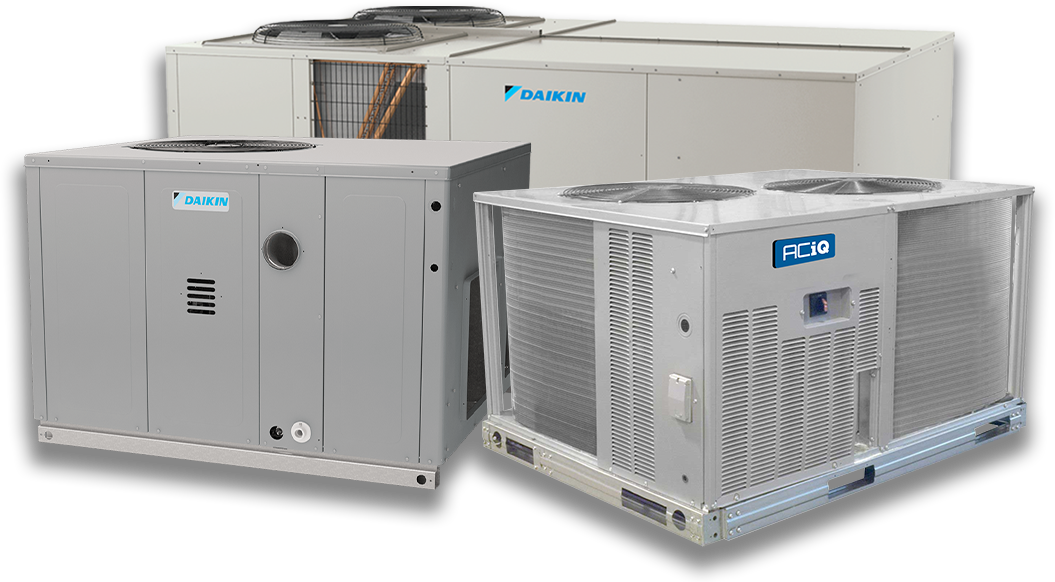
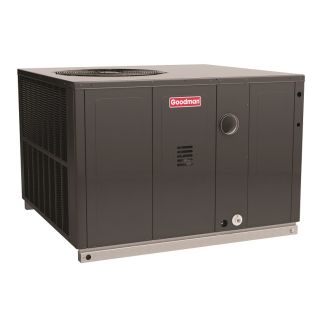
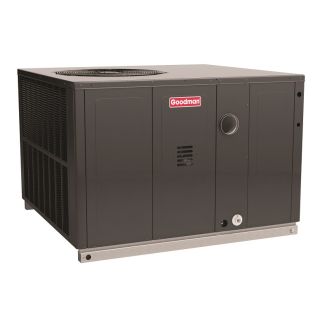
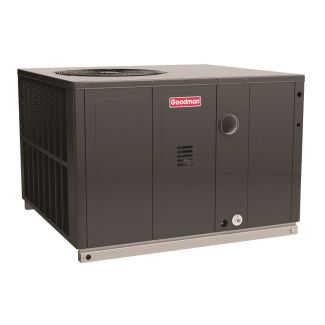
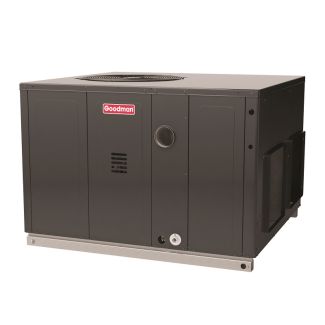
40,000 BTU's - Downflow - Central Air & Furnace Packaged Units

Need Help?

See our Rooftop & Packaged Unit Buying Guide to make for an easy and informed purchase.
11 Items

Set Descending Direction
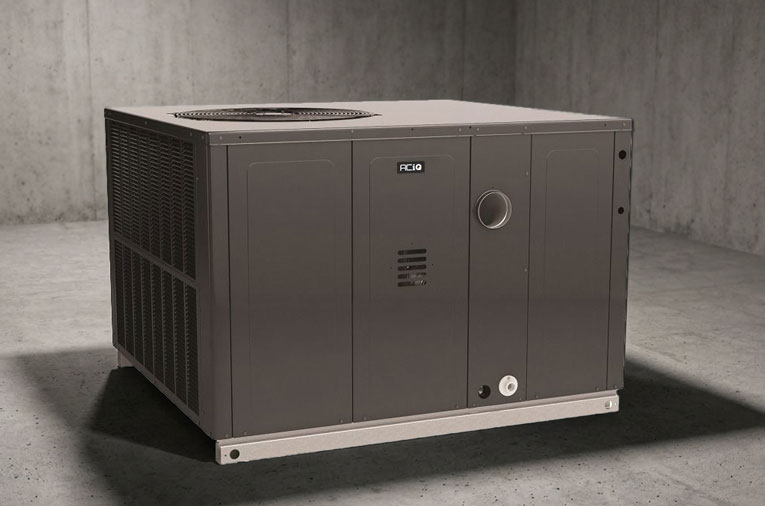
  1. 2 Ton 13.4 SEER2 40,000 BTU Gas Package Unit - R32 Downflow/Horizontal - AQ-GPGM32404031
    SAVE $479.00
    2 Ton 13.4 SEER2 40,000 BTU Gas Package Unit - R32 Downflow/Horizontal
    Model: AQ-GPGM32404031
    Rating:
    100%
    Was $3,189.00 Your Low Price Special Price $2,710.00
  2. 2.5 Ton 13.4 SEER2 40,000 BTU Gas Packaged Unit - R32 - AQ-GPGM33004031
    SAVE $491.00
    2.5 Ton 13.4 SEER2 40,000 BTU Gas Package Unit - R32 Downflow/Horizontal
    Model: AQ-GPGM33004031
    Was $3,271.00 Your Low Price Special Price $2,780.00
  3. 3 Ton 13.4 SEER2 40,000 BTU Gas Packaged Unit - R32 - AQ-GPGM33604031
    SAVE $655.00
    3 Ton 13.4 SEER2 40,000 BTU Gas Package Unit - R32 Downflow/Horizontal
    Model: AQ-GPGM33604031
    Was $4,364.00 Your Low Price Special Price $3,709.00
  4. 2 Ton 40,000 BTU 13.4 SEER2 Ultra-Low NOx Gas Packaged Unit - R32 - GPUM32404031-A
    SAVE $665.00
    2 Ton 13.4 SEER2 40,000 BTU Ultra-Low NOx Gas Package Unit - R32 Downflow/Horizontal
    Model: AQ-GPUM32404031
    Was $4,431.00 Your Low Price Special Price $3,766.00
  5. 2.5 Ton 13.4 SEER2 40,000 BTU Goodman Gas Packaged Unit - gpgm33004041
    Goodman 2.5 Ton 13.4 SEER2 40,000 BTU Gas Package Unit - Scratch & Dent – Moderate Damage
    SAVE $1,723.00
    Goodman 2.5 Ton 13.4 SEER2 40,000 BTU Gas Package Unit - Scratch & Dent – Moderate Damage
    Model: GPGM33004031-PS-PU00002
    Rating:
    98%
    Was $5,597.00 Your Low Price Special Price $3,874.00
  6. 2.5 Ton 13.4 SEER2 40,000 BTU Goodman Gas Packaged Unit - gpgm33004041
    Goodman 2.5 Ton 13.4 SEER2 40,000 BTU Gas Package Unit – Scratch & Dent – Minimal Damage
    SAVE $1,568.00
    Goodman 2.5 Ton 13.4 SEER2 40,000 BTU Gas Package Unit – Scratch & Dent – Minimal Damage
    Model: GPGM33004031-PS-PU00011
    Rating:
    98%
    Was $5,597.00 Your Low Price Special Price $4,029.00
  7. 3 Ton 13.4 SEER2 40,000 BTU Goodman Gas Packaged Unit - GPGM33604041
    Goodman 3 Ton 13.4 SEER2 40,000 BTU Gas Package Unit – Scratch & Dent – Minimal Damage
    SAVE $1,589.00
    Goodman 3 Ton 13.4 SEER2 40,000 BTU Gas Package Unit – Scratch & Dent – Minimal Damage
    Model: GPGM33604031-PS-PU00004
    Rating:
    98%
    Was $5,673.00 Your Low Price Special Price $4,084.00
  8. 2 Ton 13.4 SEER2 40,000 BTU Goodman Gas Packaged Unit - GPGM32404041
    SAVE $1,054.00
    Goodman 2 Ton 13.4 SEER2 40,000 BTU Gas Package Unit - R32 Downflow/Horizontal
    Model: GPGM32404031
    Rating:
    98%
    Was $5,268.00 Your Low Price Special Price $4,214.00
  9. 2.5 Ton 13.4 SEER2 40,000 BTU Goodman Gas Packaged Unit - gpgm33004041
    SAVE $1,120.00
    Goodman 2.5 Ton 13.4 SEER2 40,000 BTU Gas Package Unit - R32 Downflow/Horizontal
    Model: GPGM33004031
    Rating:
    98%
    Was $5,597.00 Your Low Price Special Price $4,477.00
  10. 3 Ton 13.4 SEER2 40,000 BTU Goodman Gas Packaged Unit - GPGM33604041
    SAVE $1,135.00
    Goodman 3 Ton 13.4 SEER2 40,000 BTU Gas Package Unit - R32 Downflow/Horizontal
    Model: GPGM33604031
    Rating:
    98%
    Was $5,673.00 Your Low Price Special Price $4,538.00
per page

What is a central air & furnace packaged unit?

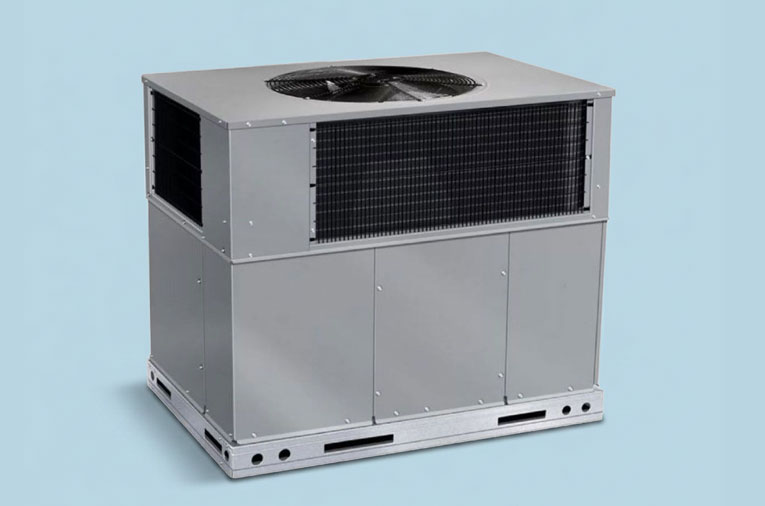
A residential central air and furnace packaged unit is an all-in-one HVAC system that combines an air conditioner, gas furnace, evaporator coil, and blower inside one weather-resistant outdoor cabinet. It can sit on a roof curb or beside a home on a ground-level equipment pad, depending on its approved airflow configuration.


This system works by using refrigerant to absorb heat from the indoor air and release it outside in the summer using the air conditioning part. Then, during the winter, the furnace heats the air before a blower sends it through the home’s ductwork.
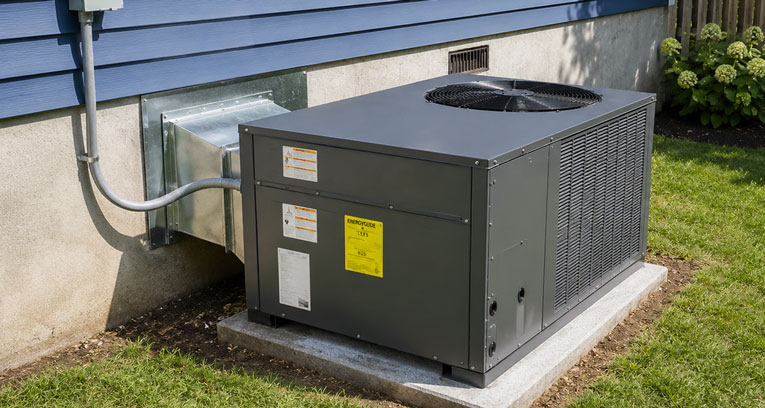
A residential central air and furnace packaged unit is an all-in-one HVAC system that combines an air conditioner, gas furnace, evaporator coil, and blower inside one weather-resistant outdoor cabinet. It can sit on a roof curb or beside a home on a ground-level equipment pad, depending on its approved airflow configuration.


This system works by using refrigerant to absorb heat from the indoor air and release it outside in the summer using the air conditioning part. Then, during the winter, the furnace heats the air before a blower sends it through the home’s ductwork.
What are the main benefits of central air & furnace packaged units?

The main benefits of central air and furnace packaged units are year-round comfort, more usable indoor space, and a simple installation. Their self-contained design is especially valuable when a home does not have room for a separate indoor furnace or air handler.

  • Heating and Cooling in One Complete System: A gas pack combines electric air conditioning with a natural gas furnace in one cabinet, eliminating the need to purchase and install separate indoor and outdoor HVAC units. For example, a current HVACDirect.com ACiQ model provides 2 tons of cooling and 60,000 BTU of gas heating from the same outdoor unit.
  • Maximizes Indoor Living Space: Because the furnace, blower, coil, and compressor are all outside, the system does not occupy a basement, utility room, attic, or indoor mechanical closet. HVACDirect.com specifically recommends packaged systems for homes where indoor equipment space is limited.
  • Easier Maintenance and Service Access: Since the unit is installed outside, technicians can inspect the compressor, blower, burners, and other components through exterior panels without needing to access indoor HVAC equipment. This can be especially convenient in homes where a furnace or air handler would otherwise be located in a tight attic, crawl space, or mechanical closet.
  • Best for Replacing Existing Packaged Units: You can easily replace a broken, failing, or old packaged unit with a new one, reusing compatible duct openings, electrical outlets, gas piping, and the same location. You still need to ensure cabinet dimensions and roof-curb openings are correct because two units with the same tonnage can be slightly different in size.
  • Powerful Natural Gas Heating for Colder Climates: Gas packs deliver the strong, consistent heating performance of a traditional gas furnace, making them well suited to colder climates where heating demand is high. By burning natural gas in a heat exchanger, gas furnaces typically deliver warmer supply air than heat pumps, providing comfortable heat even during freezing outdoor temperatures. HVACDirect.com offers residential gas packaged units with furnace inputs ranging from approximately 40,000 to 135,000 BTUs.
  • Simple Installation: This system includes everything you need in one system, so there’s no need to install two separate pieces of equipment. The refrigerant line and other components are pre-assembled and charged at a factory, so the licensed installer only needs to connect the ductwork, gas supply, electrical and thermostat wiring, and condensate drain.

A packaged system can simplify the equipment layout, but it does not remove the need for proper sizing and installation. The outdoor location, duct configuration, utility connections, and mounting surface must all be evaluated before purchase.


Which spaces are ideal for central air & furnace packaged units?

Packaged units tend to fit specific situations better than others, largely driven by available space and how the home is already set up, such as direct replacements, small indoor living spaces, and what climate the home is located in. They are a good choice where natural gas heating is preferred over an all-electric system.

  • Homes with Limited Indoor Space: Packaged units are a strong fit for homes without a basement, utility room, or mechanical closet. Housing everything outdoors frees up indoor square footage that would otherwise go to HVAC equipment.
  • Homes Replacing an Existing Gas Packaged Unit: If a home already runs a gas/electric package system, replacing it with another packaged unit usually means reusing the same equipment location, ductwork, gas line, and electrical connections. This keeps a replacement project simpler than switching to a split system.
  • Homes with Rooftop Installations: Rooftop central air and furnace packaged units are useful where placing equipment beside the home would take up valuable yard or walkway space. A downflow unit typically connects to supply and return ducts through a compatible roof curb, which supports the equipment and seals the roof opening.
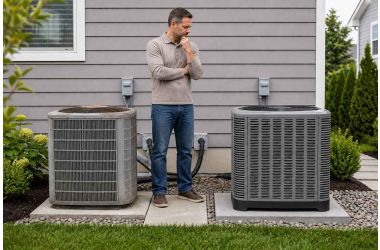
  • Homes with Ground-Level Packaged Unit Installations: Packaged gas/electric units are also commonly installed on a ground-level concrete pad next to the home. This placement keeps maintenance access easy while still keeping equipment outside the living space. This system is normally set on a stable concrete or composite equipment pad that keeps the cabinet level and above soil or minor standing water.
  • Homes in Colder Climates with Natural Gas Service: Homeowners with gas access who want strong winter heating performance often choose a gas/electric packaged unit over an all-electric heat pump. Gas tends to be cheaper in these areas and gas provides faster and hotter heating than electricity through the use of combustion.

Packaged gas units are less practical when a property does not have natural gas or an approved propane option. In those situations, a packaged heat pump, packaged air conditioner with electric heat, or another system type may be more appropriate.


What size central air & furnace packaged unit do you need?

Residential central air and furnace packaged units generally range from 2 to 5 tons, equal to approximately 24,000 to 60,000 BTU of nominal cooling capacity. The right size depends on factors such as the home's square footage, insulation, windows, climate, and overall heating and cooling load. Choosing the correct capacity helps the system maintain comfortable temperatures without excessive cycling or runtime.

  • 2 Ton: A 2 ton packaged unit provides approximately 24,000 BTU of nominal cooling capacity and is commonly used for smaller homes, condos, manufactured homes, and other residences with modest cooling loads. Current HVACDirect.com options include 2 ton models with 40,000 or 60,000 BTU of gas heat.
  • 2.5 Ton: A 2.5 ton packaged unit provides approximately 30,000 BTU of nominal cooling capacity and can work well for small to medium-sized homes with moderate cooling requirements. Depending on the product line, these systems may be available with approximately 40,000 to 80,000 BTU of gas heat.
  • 3 Ton: A 3 ton packaged unit provides approximately 36,000 BTU of nominal cooling capacity and is commonly used for medium-sized homes. Available furnace capacities vary by model, allowing the heating side of the system to be matched more closely to the home's winter heating needs.
  • 3.5 Ton: A 3.5 ton packaged unit provides approximately 42,000 BTU of nominal cooling capacity and may be appropriate for medium to larger homes with higher cooling loads. Residential units in the 3 to 3.5 ton range may be paired with furnace inputs ranging from approximately 40,000 to 100,000 BTU, depending on the model.
  • 4 Ton: A 4 ton packaged unit provides approximately 48,000 BTU of nominal cooling capacity and is generally used for larger homes with greater cooling demands. Current residential options include models with approximately 60,000 or 80,000 BTU of gas heat.
  • 5 Ton: A 5 ton packaged unit provides approximately 60,000 BTU of nominal cooling capacity and represents the largest residential size covered in this category. These systems are typically intended for larger homes with substantial cooling loads, with available furnace capacities reaching approximately 120,000 to 135,000 BTU.

If you're replacing an existing packaged unit, matching the new system's tonnage to the old one can provide a useful starting point. However, a Manual J load calculation is the recognized residential sizing method and can determine the cooling capacity the home actually requires.


What heating capacity does a central air & furnace packaged unit need?

The heating capacity a residential central air and furnace packaged unit needs generally ranges from 40,000 to 135,000 BTU of furnace input. The right size depends on factors such as the home’s square footage, insulation, air leakage, window quality, and local winter temperatures. Cooling tonnage and furnace capacity should also be considered separately, since two units with the same cooling size can still have different heating outputs.

  • 40,000 BTU to 60,000 BTU: This range is commonly used in smaller homes or homes with lighter heating demands. These capacities are often paired with 2 to 2.5 ton residential packaged units. At 80% AFUE, a 40,000 BTU furnace input delivers about 32,000 BTU of usable heat output, while a 60,000 BTU input delivers about 48,000 BTU.
  • 70,000 BTU to 80,000 BTU: This range is often a good fit for small to mid-sized homes that need more heating capacity than entry-level models provide. These furnace sizes may be found in 2.5 to 4 ton packaged units, depending on the product line and the home’s heating requirements.
  • 90,000 BTU to 100,000 BTU: These capacities are commonly used in medium to larger homes, colder climates, or homes with higher heat loss. They are often paired with 3 to 3.5 ton residential packaged units, though the exact match depends on the model and the needs of the home.
  • 120,000 BTU to 130,000 BTU: This range is generally used in larger homes or in homes located in colder climates where stronger furnace performance is needed. These heating capacities are most often found with 4 to 5 ton residential packaged units.
  • 135,000 BTU: This is the upper end of the residential gas package unit range in this category. A 135,000 BTU furnace input is typically paired with a 5 ton packaged unit and is intended for larger homes or residential applications with substantial heating demand.

When sizing, make sure not to oversize or undersize your central air and furnace packaged unit’s heating or cooling capacity because this causes poor energy efficiency, uneven temperatures, high indoor humidity, short-cycling, and extra wear and tear that shortens the equipment's lifespan. Oversized units will short cycle and cause high energy bills, while undersized ones will drive up energy costs as well and run constantly and wear down faster.


What features matter most when buying central air & furnace packaged units?

The most important features are properly matched cooling and heating capacity, efficiency ratings and technology that improves it, and strong warranty coverage. You can also compare features such as ultra-low NOx ratings, two-stage operation, and blower motor technology. Here are the top features to consider:

  • Proper Cooling and Heating Capacity: Getting both the tonnage and BTU output right for your space is the foundation for reliable year-round comfort. Undersizing either side leaves the system struggling to keep up, while oversizing leads to short cycling and uneven temperatures.
  • Energy Efficiency (SEER2 and AFUE): Compare both the cooling efficiency (SEER2) and heating efficiency (AFUE) when choosing a central air and furnace packaged unit. For residential units, SEER2 ratings usually range from 13.4 to 15.2. AFUE ratings are typically at about 80%, but can range higher. Higher-efficiency systems can reduce energy consumption and operating costs while providing reliable year-round comfort.
  • Two Stage and Variable Speed Technology: Two-stage equipment can run at a lower output before moving to full capacity, while multi-speed or electronically commutated blower motors can adjust airflow more efficiently than a basic fixed-speed motor. The Goodman model GPGM54210031 listed by HVACDirect.com uses a two-stage compressor and multi-speed blower, while the ACiQ model PGB424060K000B uses a high-efficiency ECM blower. You can filter out products that contain these types of technology for easy browsing.
  • Smart Thermostat Compatibility: Many current packaged units support Wi-Fi thermostats, letting homeowners set schedules and adjust temperatures remotely. It’s a relatively low-cost upgrade that adds meaningful day-to-day convenience.
  • Warranty Coverage: Warranty terms differ by brand and component, with parts coverage commonly running 5 to 10 years, so it's worth comparing what's covered on both the AC and furnace side before buying. HVACDirect.com lists full warranty terms and registration requirements on each individual product page. You can register your warranty online, though it must be done within 60 days. A current HVACDirect.com example is ACiQ coverage of 10 years on parts, 3 years of no-hassle replacement, and lifetime heat-exchanger protection on qualifying registered PGB models.

High-efficiency or staged features provide the most value when the system is correctly sized and properly controlled. You can sort products easily by these features to help you quickly find and compare products with certain features that you want.


Additional factors to consider when buying central air & furnace packaged units

Additional factors that should be considered before purchasing include the unit’s cabinet and roof curb dimensions, electrical and gas requirements, duct compatibility, and professional service access. If you do not measure and check compatibility with your installation location, you will have costly fixes down the line.

  • Installation Location: Packaged units install either on a rooftop or a ground-level pad, and HVACDirect.com's lineup includes both horizontal and downflow airflow configurations to match.
  • Cabinet Dimension and Roof Curb Compatibility: The new unit’s width, depth, height, weight, and duct openings must match the available space. You can buy a custom curb adapter to fix the misalignment, with compatible adapters available on HVACDirect.com if needed.
  • Electrical and Natural Gas Requirements: Residential central air and furnace packaged units in this category use 208/230V single-phase electrical service. Before purchasing, confirm that the home's electrical service and natural gas supply meet the requirements listed for the specific model. If you're replacing a packaged unit that uses 208/230V three-phase or 460V three-phase power, check out HVACDirect.com's commercial gas package unit category for compatible commercial equipment.
  • Ductwork Compatibility: Most packaged units connect to square ductwork, so homes with round ducts may need transition pieces or adapters. This is a relatively minor but easy-to-overlook detail when planning an installation. HVACDirect.com product pages list accessories such as roof curbs and square-to-round duct adapters for easy purchase as you choose your unit.
  • Professional Installation and Maintenance: A licensed professional should handle the gas connection, electrical work, duct sealing, condensate drainage, combustion setup, refrigerant-related service, and rooftop lifting. We recommend professional central air and furnace packaged unit maintenance at least twice per year, preferably before each heating and cooling season peak, including filter changes, coil cleaning, duct inspection, and refrigerant checks.

As of January 2026, refrigerant regulations are actively shifting, with newer R32 and R454B units replacing older R410A equipment, so it's worth checking a unit's refrigerant type against current regional requirements before purchasing.


Which brands make the best central air & furnace packaged units?

Goodman, ACiQ, and RunTru by Trane are among the residential central air and furnace packaged-unit brands available through HVACDirect.com. Each brand offers different combinations of cooling tonnage, furnace capacity, efficiency, airflow configuration, and features for homeowners replacing or installing a residential gas package system.

  • Goodman: Goodman packaged units are known for dependable performance and strong value, with residential options available across common home cooling capacities. They are a popular choice for homeowners replacing an existing gas/electric packaged unit and offer multiple combinations of cooling tonnage and furnace heating capacity.
  • ACiQ: ACiQ packaged systems combine residential heating and cooling in one outdoor cabinet with modern features and competitive pricing. Available horizontal/downflow configurations make it easier to match the equipment to different residential duct layouts and replacement installations.
  • RunTru by Trane: Backed by Trane, RunTru packaged units bring recognized engineering to a more affordable residential price point. Current HVACDirect.com options include residential-sized 2 and 3.5 ton gas/electric packaged units, providing another choice for homeowners replacing an existing package system.

The best brand is the one that offers the correct tonnage, heating input, airflow direction, voltage, phase, cabinet footprint, refrigerant, and local emissions compliance. You can compare and filter through these features easily on HVACDirect.com.


How much do central air & furnace packaged units cost?

The total cost for the equipment and installation of one of these systems typically ranges from $3,700 to $11,000+, depending on the brand, tonnage, and efficiency. Here’s a breakdown of some of the costs and potential savings to expect:

  • Equipment Price: Residential central air and furnace packaged units typically cost between $2,700 and $9,000, depending on tonnage, brands, and efficiency.
  • Installation and Labor Costs: These systems must be installed by a licensed professional, which can cost around $1,000 to $3,000 unless there are other structural or electrical modifications needed or if a crane is needed to lift the product into place. Local hourly labor rates vary significantly across the nation, though they normally range from around $75 to $250 an hour.
  • Operating Expenses: During seasonal highs, operating costs can range between $100 and $250+ a month, though they can be a bit lower if you have a system with higher efficiency. It also highly depends on your local utility rates.
  • Maintenance and Long-Term Ownership Costs: You should have your system inspected and cleaned annually, which typically costs $150 to $300. For standard filters, you should change them every 3 to 6 months, which usually runs about $20 to $60 depending on  the grade. You should also account for any minor or major mechanical repairs needed as well.
  • Rebates, Tax Credits, and Financing: Local utility and manufacturer rebates can save you approximately $500 to $2,500 in total on your system depending on what is offered. HVACDirect.com also has its own financing options available if you qualify. 

It can typically cost you between $200 and $400 on average for permits, though this could be as low as $75 or more than $800, depending on your exact city or county building department rules, the total project valuation, and whether new electrical lines or duct transitions are required.


Why buy central air & furnace packaged units from HVACDirect.com?

HVACDirect.com offers residential central air and furnace packaged units with detailed specifications, wholesale pricing, expert support, and fast shipping. Customers can compare tonnage, heating BTU, airflow direction, refrigerant, efficiency, and brand directly on the category and product pages.

  • Shop Trusted Brands at Competitive Prices: HVACDirect.com carries residential packaged units from Goodman, ACiQ, and RunTru by Trane, with competitive pricing and free shipping included on most orders. This gives homeowners options across a range of budgets and performance needs.
  • Complete Product Information: Every product page includes specifications, compatibility details, warranty terms, and installation resources. This makes it easier to confirm a unit will actually fit your home's setup before ordering. You can also find complete buying guides available through our information library.
  • Competitive Pricing and Financing: Alongside wholesale pricing, HVACDirect.com offers 0% financing for 12 to 48 months on qualifying purchases through Bread Pay. This makes larger equipment purchases more manageable upfront.
  • Expert Customer Support: HVACDirect.com's HVAC specialists can answer product questions and help narrow down the right packaged unit for a specific home. This support is available by phone, chat, or email and is available pre- and post-purchase.
  • Fast Nationwide Shipping: With free shipping included on most packaged units and 24/7 chat support, HVACDirect.com is built to get equipment to homeowners and contractors quickly. We have warehouses located across the continental United States to help ensure faster delivery times.

Buying online provides more control over equipment selection and pricing, but the unit should be reviewed with the installer before ordering. You should confirm with an expert beforehand that the model, curb, adapters, gas kit, thermostat, and any electrical accessories are compatible.
Recent Posts

Why Inverter AC Condensers Are the Best Option for Lower Electric Bills
Homeowners cannot control the price charged for each kilowatt-hour, but they can control how much electricity their cooling system needs. That is becoming more important as residential electric rates continue to climb. The U.S. Energy Information Administration forecasts an average residential...
Read more
How Much Does It Cost to Replace an HVAC System in 2026?
How the equipment is purchased can also make a meaningful difference. For a common full-system project—such as replacing a central air conditioner and gas furnace while keeping usable ductwork—a turnkey contractor-supplied project may cost **about $11,000 to $17,000**. Purchasing a matched system...
Read more
How Can an A2L Mitigation Board Help You Replace Only Your AC Condenser?
When an older R-410A outdoor condenser fails, replacing the entire HVAC system is not always the only option. If the indoor evaporator coil or air handler is still in usable condition, an A2L refrigerant detection and mitigation kit may allow that indoor equipment to remain in place while the...
Read more
Can I Replace Just My Outdoor AC Unit?
When the outdoor portion of a central air conditioner fails, replacing only that unit can sound like the simplest and least expensive solution. Sometimes it is. However, a central split system is not a collection of interchangeable parts. The outdoor condenser and the indoor evaporator coil work...
Read more

Call Now and Get a Free Quote Today! 1-800-397-1392

Frequently Asked Questions

Central air and furnace packaged units commonly last about 15 to 20 years with proper sizing, installation, and maintenance. Outdoor exposure, coastal air, neglected filters, dirty coils, heavy use, and combustion problems can shorten that lifespan.

Packaged units should generally be serviced once to twice a year, usually once before the cooling season and once before heating season, since both the AC and furnace components live in the same cabinet. Skipping either check can let small issues, like a dirty coil or a failing igniter, go unnoticed until they cause a bigger breakdown. Maintenance should cover filters, coils, condensate drainage, burners, ignition, heat exchanger condition, electrical connections, airflow, and refrigerant performance.

Yes, ground-level installation on a concrete or composite equipment pad is one of the standard placement options for residential packaged units, alongside rooftop mounting. The correct location depends on the home's existing duct configuration, available outdoor space, and the airflow design of the unit.

Ground-level installations typically require a level concrete or composite pad to keep the unit stable and properly elevated. Rooftop installations instead use a roof curb, so the specific requirement depends on which placement your home uses.

In most replacement situations, yes, as long as the new unit's airflow direction (horizontal or downflow) and connection size match the existing ductwork. HVACDirect.com's packaged units are available in both configurations specifically to simplify these kinds of replacements. If the new cabinet or duct locations differ, the installer may need a roof-curb adapter, square-to-round adapter, plenum, or custom sheet-metal transition.

Packaged units use return-air filters sized according to the model, duct system, or external filter rack rather than one universal filter, usually ranging from 1 to 5 inches thick. Standard 1-inch filters commonly need replacement every 2 to 3 months, while thicker media filters may last 6 to 12 months; inspect them more frequently during heavy heating or cooling use.

Packaged units typically run in a similar noise range to standard outdoor condensers, generally 55 to 75 dBA, depending on the compressor stage, blower and installation. This is comparable to about the sound of a normal conversation. Two-stage and variable-speed models tend to run quieter on average, since they spend more time at a lower operating stage than a standard single-stage unit.

Yes, the air conditioning side of a packaged unit produces condensate that needs a drain line, similar to a standard split system's indoor coil. Since the whole unit sits outside, drainage is typically routed directly onto the ground or pad rather than to an indoor drain.

Some packaged units may qualify for manufacturer, utility, state, or local efficiency rebates, depending on the efficiency and equipment rating. Utility rebates are typically cash-back, while state and local programs typically have point-of-sale discounts. Manufacturers may also offer seasonal promotions and rebates. You can find these local and state rebates on HVACDirect.com’s rebate center, but keep in mind that the federal residential Energy Efficient Home Improvement Credits are not available for property placed in service after December 31, 2025.

Central air and furnace packaged unit warranties vary by model and brand but commonly include up to 10 years of parts coverage and longer heat exchanger coverage when applicable registration requirements are met. For example, qualifying Goodman, ACiQ, and RunTru by Trane residential packaged units offer different combinations of parts, heat exchanger, and replacement coverage. Always check the specific product page for exact warranty terms and registration requirements before purchasing.

Central air and furnace packaged units are generally delivered by freight truck on a skid because they can weigh several hundred pounds or more. You should inspect the cabinet and shipment before signing, photograph damage, and arrange appropriate equipment or people for moving the unit from the delivery point to the installation location. HVACDirect.com has lift gate options available as an add-on service if needed.

blockboard tech