Your cookie preferences
We use cookies to remember your preferences and understand how shoppers use our site, helping us improve your shopping experience.
Read our privacy policyThe Daikin 3 zone mini split system offers efficient, ductless climate control with three independent zones. Each of our 3 zone mini splits features a single outdoor condenser/compressor connected to up to three indoor air handlers —available now at HVACDirect.com.

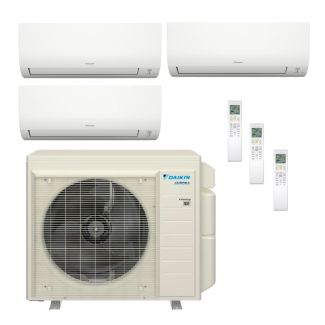
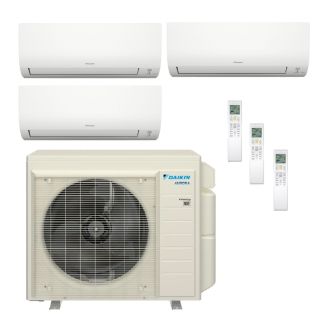
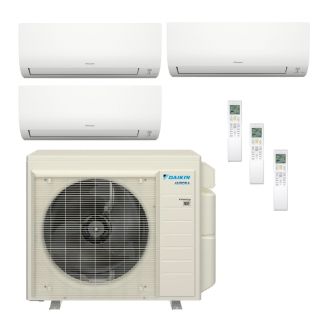
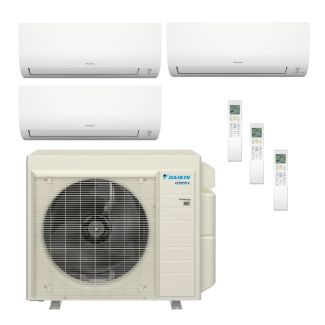
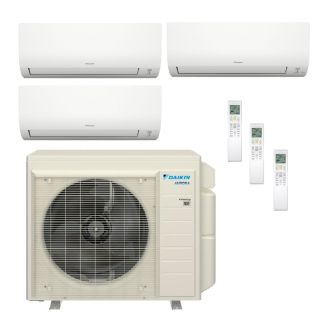
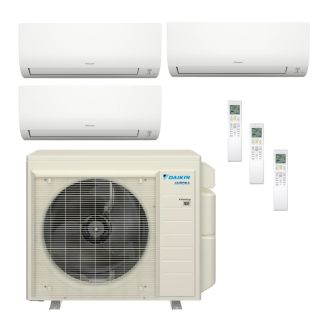
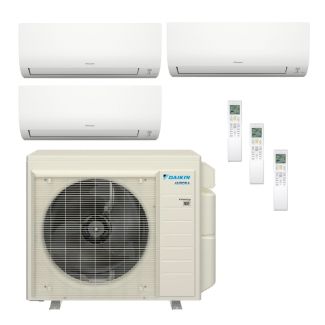
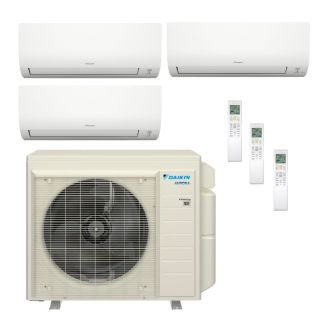
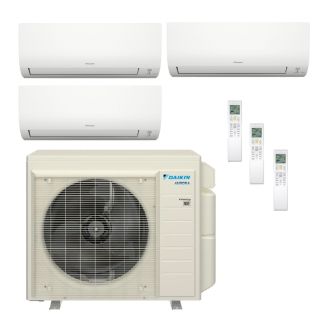
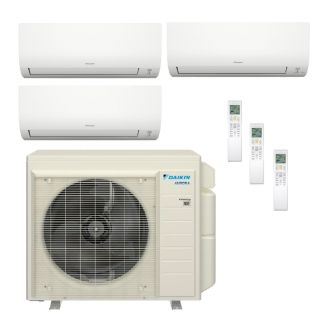
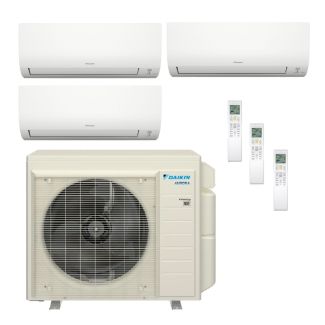
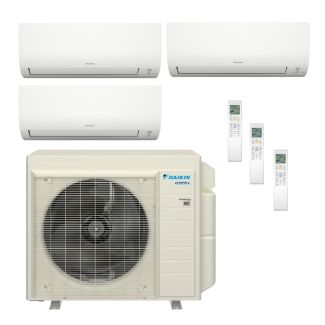
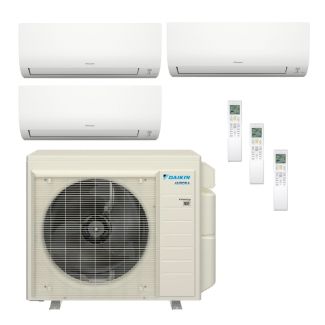
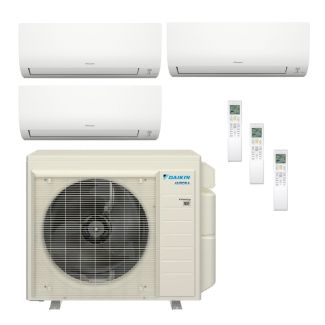
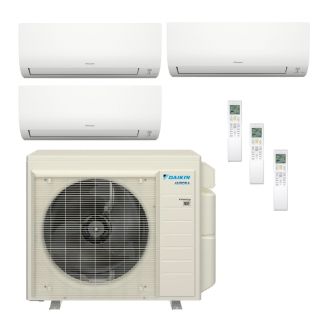
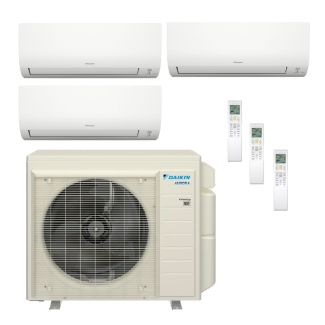
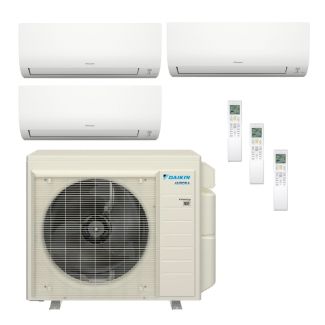
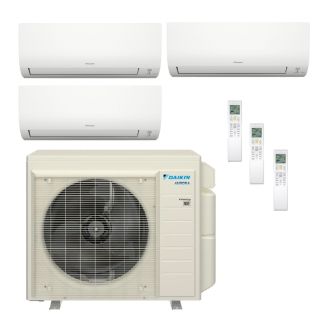
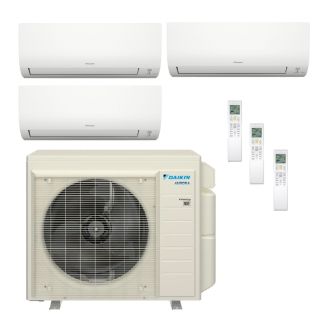
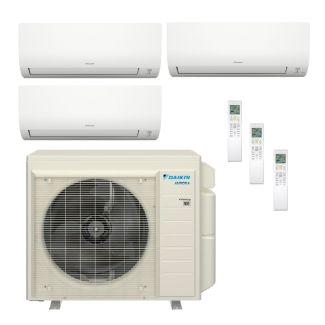
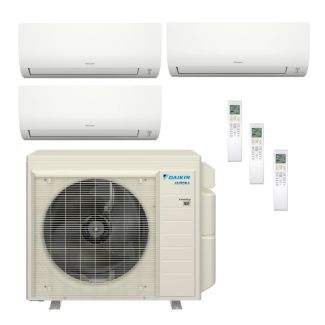

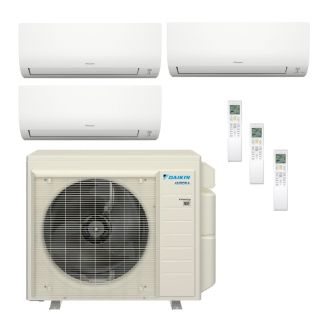

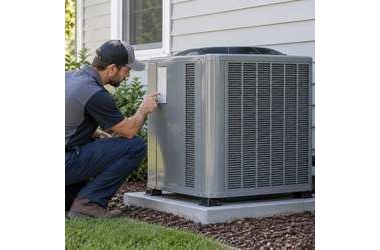
Daikin 3 zone mini split systems are ductless heat pumps that connect three indoor air handlers to one outdoor condenser. These configurations provide independent climate control for three separate zones, such as three distinct bedrooms or a combination of a living room and two offices. These systems work by utilizing variable-speed inverter compressors to circulate refrigerant through copper line sets to each indoor air handler. This process allows the system to heat or cool each room independently based on thermostat settings.
These mini split systems work best in well-insulated homes with 800 to 2,100 square feet and standard-height ceilings. Daikin's 3 zone systems provide strong localized climate control for the following spaces.
Multi-Level Townhomes: Positioned to handle separate floors independently, these tri-zone systems allow users to cool two upper-level bedrooms while maintaining a different temperature in a different room on the main living level.
Residential Ranch Homes: Distributed across the ranch-style layout, Daikin 3 zone systems provide direct heating and cooling to a cluster of three separate bedrooms located away from the main living area.
Home Additions and In-Law Suites: Installed in newly constructed rooms or wings, these Daikin systems manage climate control without overextending the existing ductwork or central HVAC system of the primary property.
Detached Workshops and Garages with Finished Offices: These sorts of tri zone systems can be arranged between active workshop bays, enclosed storage areas, and upstairs office rooms to maintain year-round comfort. Useful when one zone needs heat, another needs cooling, and a third needs independent control.
Converted Attics and Basements: Placed in below-grade or under-roof living spaces that lack proper central air circulation, these 3 zone systems address the chronic temperature fluctuations common here.
Outdoor temperatures below -13°F, salt exposure, dust, and direct sun can reduce heating and cooling performance.
Daikin 3 zone mini split systems are available in 24,000 BTU and 36,000 BTU sizes. Each configuration pairs indoor units of different capacities to distribute the thermal load proportionally across each room.
24,000 BTU (1,000 to 1,500 sq ft): Compact residential layouts requiring light climate management across small rooms, like one 12,000 BTU primary unit with two 6,000 BTU secondary units for a 24,000 BTU system.
36,000 BTU (2,000 to 2,500 sq ft): Larger multi-room configurations or light commercial environments with expansive open floor plans. An example of a 36k 3 zone system would be an 18K primary head for a combined living and dining room, a 12K secondary head for a bedroom, and a 6K tertiary head for a home office.
Common 3-zone layouts include a larger 12,000 BTU or 18,000 BTU indoor unit for the main living area with two smaller 7,000 BTU or 9,000 BTU units for separate bedrooms. Another highly common configuration utilizes three 9,000 BTU air handlers to deliver uniform climate control across three equal-sized rooms in a standard residential layout.
A Daikin 3 room mini split typically requires a total financial investment of $5,500 to $13,500, depending on the total BTU capacity, chosen indoor air handler styles, and local installation labor rates.
Your overall budget will break down into these specific core cost categories:
Equipment Cost: A typical cost range for Daikin equipment is between $5,500+ and $7,000+.
Installation and Labor Cost: Depending on the complexity of the job and various local rates for HVAC contractor oversight, installation costs can range from $3,000 to $6,000, while labor fees can reside between $1,500 and $3,500.
Operation and Maintenance Cost: Operating the system adds roughly $30 to $80 to your monthly utility bill, while annual maintenance inspections cost about $150 to $300.
Additional expenses for critical installation accessories, such as line set covers, heavy-duty condenser mounting brackets, surge protectors, and concrete equipment pads, can add at least $600 to the final project total. For example, each lineset is around $200 and a minimum of three linesets are necessary for this kind of system.
No, a layperson cannot install this kind of Daikin 3 zone system, because the brand does not produce DIY systems. Only a professional can install a Daikin standard system during a professional installation, complete with the necessary permits and connection equipment. Hiring a pro reduces hassle and lowers overall equipment costs, while increasing the warranty period. Advanced refrigerant calculations, specialized tools, and high-voltage electrical work exceed DIY system requirements and transfer those responsibilities to professional installers.
DIY Installation: Because Daikin does not make DIY mini splits, anyone attempting a DIY installation on a standard mini split risks voiding the manufacturer's warranty and introducing serious risks of refrigerant leaks, incorrect line-set flaring, and electrical control board short circuits.
Professional Installation: Hiring a certified HVAC technician for a standard Daikin mini split install ensures that line sets are properly evacuated with a vacuum pump, electrical connections comply with structural safety codes, and the standard mini split system qualifies for full warranty protection.
Most local building departments require official mechanical permits and strict adherence to National Electrical Code standards for high-voltage circuits, meaning professional EPA-certified HVAC handling is typically required to finalize the installation of this specific brand and zone configuration.
Daikin 3 zone systems commonly produce wall mount indoor heads, which are available directly at HVACDirect.com. In addition, Daikin does make other unit styles, including floor mount, concealed duct, and ceiling cassette consoles.
Wall Mount: Daikin wall mounted handlers are the most common style that is available in multi zone systems, including the Emura, Vista, Aurora, and standard series.
Floor Mount: A low-profile unit designed to sit close to the floor or fit beneath windows, the brand’s floor mounts are optimized for efficient heating distribution.
Concealed Duct (or Slim Duct): Sometimes called a slim duct, Daikin concealed duct units are compact, hidden air handlers installed behind walls or above ceilings, delivering air through short duct runs or discrete grilles.
Ceiling Cassette: The brand’s take on the cassette head is a ceiling mount unit that sits flush and distributes air in multiple directions, available in standard multi zone configurations.
HVACDirect.com’s “Design Your Own” tool allows you to customize your standard Daikin system and select the air handler type and size for each space, mixing styles as needed. Combined indoor capacity can typically reach up to 130% of the outdoor unit's rated BTU, since all zones rarely run at maximum load simultaneously.
Daikin 3 zone mini splits require a dedicated 230V, single-phase, 60 Hz circuit to the outdoor condenser. To ensure code compliance and safe operation, your electrical panel and wiring installation must meet these exact numerical specifications:
25A to 35A Double-Pole Circuit Breaker: The exact overcurrent protection size depends on your total outdoor compressor capacity, with 24,000 BTU models requiring a 25 amp (A) breaker and larger 36,000 BTU models requiring 25A to 35A breakers.
Minimum Circuit Ampacity of 18A to 26A: The electrical supply lines must be sized to continuously handle this specific current load without overheating the circuit.
10-Gauge or 8-Gauge Stranded Copper Supply Wiring: Installers must run heavy-duty 10 AWG wire for smaller 25A systems or thicker 8 AWG wire for 35A systems from the main panel to the outdoor disconnect box.
14-Gauge Four-Conductor Interconnecting Wire: Each of the three indoor air handlers draws its 230 power and transmits data signals directly from the outdoor condenser using a continuous run of 14 AWG four-conductor stranded wire.
It is important for installers to verify the wire gauge specification against the applicable Daikin installation manual. Failure to match the breaker size and wire gauge to these precise manufacturer ratings can cause frequent nuisance tripping, permanently damage the sensitive inverter control boards, or violate local electrical safety codes.

Yes, these mini split systems are highly energy efficient, because many of them utilize variable-speed inverter compressors that continuously adjust power consumption to match the exact thermal load of each active room. That continuous adjustment allows Daikin tri-zone units to deliver a 20 to 21 SEER2 range, with some models reaching up to 24 SEER2. This precise load balancing allows homeowners to eliminate energy waste by completely turning off climate control in unoccupied zones while maintaining primary living areas at their programmed temperature setpoints.
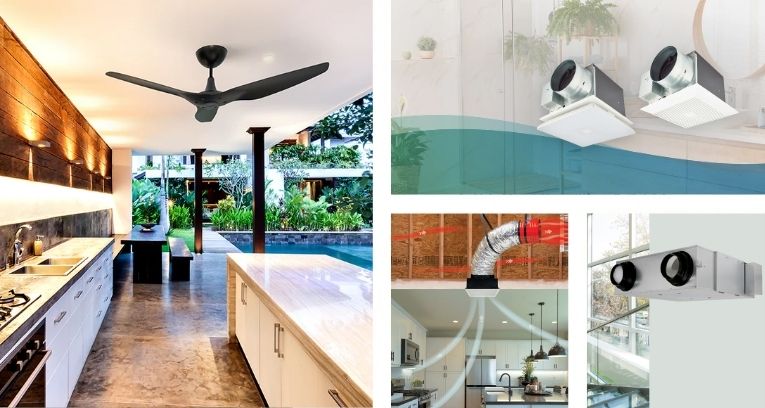
For minimal noise, choose a larger-diameter fan so it can run at lower speed while still moving sufficient air. Also ensure proper installation (tight hardware, clean blades, minimal obstructions) for best results.
Daikin Industries Limited, a global heating and cooling manufacturer headquartered in Osaka, Japan, makes Daikin 3 zone mini split systems. The company designs and produces its own proprietary inverter compressors, electronic control boards, and advanced indoor air handlers across various global manufacturing facilities, including those located in Japan, Europe, and the United States.
No, Daikin does not make DIY 3 zone mini split systems, as all of their mini split equipment is engineered strictly for professional installation only. Every multi zone system in their lineup requires standard field-flared copper line-set connections, a comprehensive nitrogen pressure test, and a complete system vacuum draw using specialized HVAC tools. Attempting to install one of these configurations yourself will immediately void the comprehensive parts warranty provided by the manufacturer.
Warranty coverage varies by model and registration status, but some systems (which includes the compressor) may offer up to 10- or 12-year coverage, if the system is installed by a licensed contractor and registered online within 60 days of the installation date. For commercial installations, the manufacturer modifies the coverage period to a standard 5-year parts warranty.
Yes, most Daikin 3 zone units can both heat and cool your home, acting as all-season heat pumps that provide year-round climate control. Because they share one outdoor condenser, all three zones must run in the same mode at the same time. While you cannot cool one bedroom while simultaneously heating another, you can set the exact temperature in each zone or turn off airflow in each zone.
Daikin 3 room systems typically last between 15 and 20 years when they receive routine maintenance and annual professional servicing. Because these multi zone systems utilize variable-speed inverter compressors, they cycle on and off less frequently, which reduces mechanical stress and preserves the lifespan of critical internal electronics.
Yes, these Daikin units operate as quietly as 19 dBA on some indoor units, which are whisper-quiet sound levels. The outdoor condenser unit typically operates at 48 to 56 dBA, which is at the level of a quiet residential neighborhood.
Yes, these mini split systems feature a dedicated "Dry Mode" that removes moisture by slowing the fan and cooling the coil. Because each zone is controlled independently, you can activate this dehumidification setting in a single humid room without affecting the comfort settings of the other two active zones. The system's variable-speed inverter compressor automatically optimizes this process, extracting excess humidity efficiently without overcooling your space.
Daikin 3 zone mini split filters should be cleaned every 4 to 6 weeks, with a full outdoor inspection at least once a year. Additionally, the outdoor condenser unit should receive a thorough inspection and coil cleaning at least once a year, typically before the heavy cooling or heating season begins. Keeping up with this routine schedule protects the system's variable-speed compressor from unnecessary strain and ensures high-efficiency performance throughout its lifespan.
A Daikin 3 room system can heat and cool up to three separate rooms from one outdoor unit. Each of the three indoor air handlers connects directly to individual thermostats, giving you localized, customized climate control over each room's comfort level.


