Your cookie preferences
We use cookies to remember your preferences and understand how shoppers use our site, helping us improve your shopping experience.
Read our privacy policy

Mitsubishi’s 2 zone mini split air conditioner and heat pump systems provide efficient heating and cooling for two areas in your home.
Shop now and customize your Mitsubishi mini split system with ease.
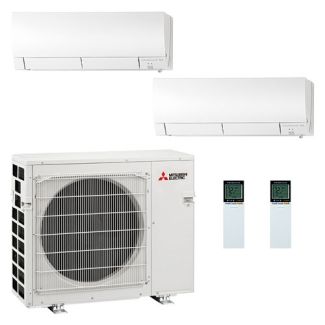
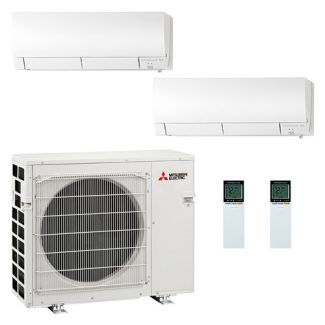
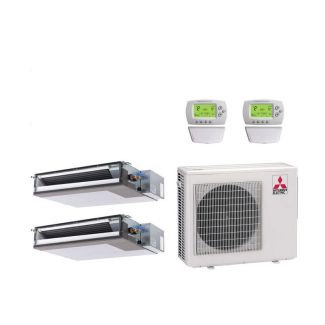

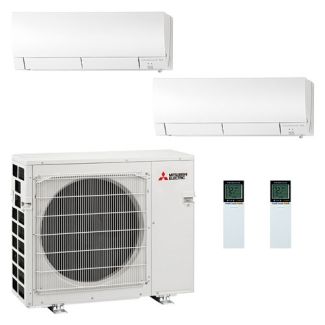
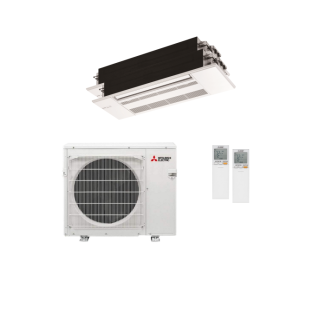
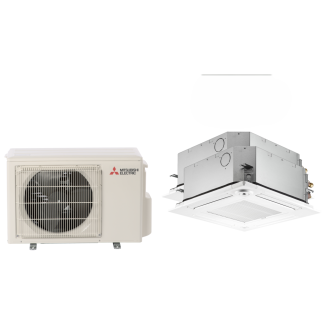

Mitsubishi dual zone mini split systems are ductless heating and cooling systems that use one outdoor condenser connected to two separate indoor air handlers, which are the units responsible for blowing heated or cooled air into each room. With two independent air handlers, each zone can maintain its own temperature setting for personalized comfort, and most Mitsubishi dual zone systems use inverter-driven technology to automatically adjust performance for better efficiency and more consistent temperatures.
These systems work by transferring heat between the indoor air handlers and outdoor condenser through refrigerant lines to cool the space and, on heat pump models, provide heating as well. Most Mitsubishi dual zone systems use inverter-driven variable-speed compressors that automatically adjust output based on demand for quieter operation and lower energy use, although a small number of Mitsubishi models are cooling-only systems without heating capability.
Mitsubishi 2 zone mini split systems are well-suited for homes with standard 8- to 10-foot ceilings and good insulation, and they work well in homes with two separate living areas that need independent temperature control, covering 800 to 2,400 square feet. Common setups use Mitsubishi MXZ-Series outdoor units paired with indoor models like the Mitsubishi MSZ-GL, MSZ-GS, or premium MSZ-FS series.
Primary Bedroom and Nursery: This setup allows for a consistent, warm temperature in the baby’s room while keeping your bedroom cooler for better sleep. Having these two areas as separate zones guarantees comfort for everyone throughout the night. The MSZ-FS is very popular in bedrooms for its quiet indoor units and precise temperature control, providing a low-sound, comfortable environment.
Home Office and Guest Suite: Home offices and guest suites are often occupied at different times and benefit from separate temperature settings. Mitsubishi MSZ-GL or MSZ-GS wall mount units would be an excellent choice for creating two room-by-room comfort levels without running your whole house's central HVAC system.
Finished Basement Rooms: Basements naturally get damper and cooler than most areas of the house. Finished rooms below ground, such as a media room or home gym, often need their own climate control, which a central system may not reliably provide. A dual zone Mitsubishi setup allows you to control the temperature in two finished basement rooms separately.
Kitchen and Living Room Combo: Kitchens make a lot of heat from appliances, while living rooms need different temperatures depending on the time of day and how many people are in there. A Mitsubishi dual zone system works better than a single thermostat because it can balance temperatures between the two areas.
Garage Workshop and Bonus Room: A garage or barn being used as a workshop might create dust and heat that make it a poor candidate to share a zone with an adjacent bonus room or workshop. Giving each space its own independently sized indoor unit means the workshop can run harder when needed without overcooling or overheating the bonus room next to it.
Poor insulation, large window areas, high ceilings, excessive sun exposure, and extreme outdoor temperatures can all reduce efficiency and overall heating or cooling performance. These factors should always be considered alongside square footage when sizing a Mitsubishi 2 zone system.
The most common BTU sizes for these systems range from 20,000 BTU to 42,000 BTU, commonly using a combination of 9,000, 12,000, 18,000, or 24,000 BTU indoor air handlers. Residential dual zone systems are commonly paired with an MXZ-Series outdoor unit.
20,000 BTU (800 to 1,000 sq. ft.): Mitsubishi 20k dual zone systems, usually built around the MXZ-2D20NL outdoor unit, are perfect for two medium-sized rooms like bedrooms, offices, or a bedroom and living room combination. Common setups include paired 9k and 9k or 6k and 12k indoor units.
24,000 BTU (1,000 to 1,500 sq. ft.): Mitsubishi 24k dual zone systems are a great choice for larger bedrooms, open living spaces, finished basements, or home additions that require separate temperature control in two areas. Common setups include 9k and 15k, 12k and 12k, or 9k and 18k indoor unit combinations with MXZ-Series outdoor condensers.
30,000 BTU (1,250 to 1,750 sq. ft.): Mitsubishi 30k two zone systems often use outdoor units such as the MXZ-3C30NAHZ4 Hyper Heat condenser and work well for large living areas, oversized garages with attached rooms, or multiple standard rooms in a mid-sized home. Common configurations include 12k and 18k or dual 15k indoor air handlers.
36,000 BTU (1,500 to 2,000 sq. ft.): Mitsubishi 36k dual zone systems are often used in larger spaces like homes, workshops, or restaurants, where two larger zones need high-capacity heating and cooling. Some configurations include 18k and 18k or 12k and 24k.
42,000 BTU (1,800 to 2,400 sq. ft.): Mitsubishi's larger residential 2 zone systems are suited for large open homes, retail spaces, or demanding commercial applications requiring two high-capacity zones. Common configurations include 18k and 24k or dual 24k indoor units, depending on room layout and overall thermal load.
Proper sizing is important because an undersized system may run constantly without being able to keep both rooms comfortable, while an oversized system can short cycle, reducing efficiency and humidity control. It's not just about square footage; you also need to consider insulation, ceiling height, sun exposure, and the layout of both zones when choosing a system.
As a premium brand in the air conditioning industry, Mitsubishi dual zone mini split systems usually cost between $5,000 and $10,000+ installed, depending on the system size, indoor unit styles, installation complexity, and electrical or line set requirements. Here’s a breakdown of the costs:
Equipment Cost: $4,000 to $8,000+, depending on the specific BTU capacity and efficiency rating. The higher the capacity and efficiency, the more the system will cost. Some indoor units, such as concealed ducts, cost more than others, as well.
Installation and Labor Cost: $1,000 to $3,000+, due to the complexity of running multiple line sets and electrical connections and dependent on local labor rates.
Operation and Maintenance Cost: $50 to $80 for electricity monthly and around $200 annually if you choose to do a professional annual cleaning. Mitsubishi mini splits usually have washable filters and self-cleaning features that keep maintenance costs low, unless you need repairs.
Additional costs to budget for include line set covers, wall sleeves, and mounting hardware not bundled with the system, which typically run $100 to $300 for a dual zone setup, along with $100 to $300 for mechanical and electrical permits where your local jurisdiction requires them.
These systems are not designed for DIY installation and require licensed professionals for refrigerant handling and electrical work. Homeowners can still complete some prep work themselves before the final installation if they wish.
DIY Installation: Mitsubishi does not offer a DIY 2 zone product line with pre-charged, tool-free connections. Their systems require refrigerant line work, vacuuming, and startup procedures that legally must be completed by a certified technician, and a self-install will void the manufacturer’s warranty.
Professional Installation: Licensed HVAC contractors handle the refrigerant work, startup, and warranty activation for Mitsubishi dual-zone systems. Systems installed by a Mitsubishi Diamond Contractor can qualify for extended warranty coverage of up to 12 years on parts and the compressor.
Mechanical and electrical permits are commonly required depending on local code. Your installer will typically obtain them and add them into the cost of the installation.
Mitsubishi offers several indoor unit styles for dual zone mini split systems, allowing homeowners to match the installation type, room layout, and visibility preferences of each space. Available options include wall mount, ceiling cassette, slim ceiling cassette, and concealed duct configurations.
Wall Mount: Wall mounted units are Mitsubishi’s most common indoor unit style for dual zone systems and are available across multiple series and capacity ranges. Mounted high on an interior wall, models like the Mitsubishi MSZ-GL, MSZ-GS, and MSZ-FS provide direct airflow across the room and are typically the easiest and most affordable option to install.
Ceiling Cassette: Mitsubishi ceiling cassette units mount flush in the ceiling and distribute air in four directions, making them a strong fit for open living areas, dining rooms, or commercial spaces where a wall mounted unit would stand out visually. Popular examples include the MLZ one-way cassette and PLA four-way cassette series, both available in select 2 zone configurations.
Slim Ceiling Cassette: Mitsubishi slim ceiling cassette units are designed for spaces with limited ceiling depth or tighter joist spacing where a standard cassette may not fit. Models like the MLZ series mount flush in the ceiling for a cleaner appearance and are available in select 2 zone compatible configurations.
Concealed Duct: Hidden up top, just above the ceiling line, concealed duct indoor units feed air through brief channels ending at floor or wall openings, leaving them out of sight and out of mind. Usually tied to two-area outdoor setups, Mitsubishi’s SEZ plus PEAD models fit snugly into renovated houses, without visible hardware cluttering the space.
The best indoor unit style depends on the room layout, available installation space, ceiling structure, and whether you want the equipment visible or hidden. Some systems will let you choose different indoor units.
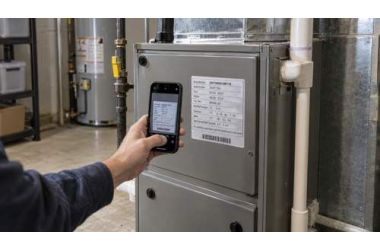
Most Mitsubishi dual zone mini split systems require a dedicated 208/230-volt electrical circuit with a 20- to 60-amp breaker, outdoor disconnect box, and copper wiring sized to the unit’s electrical load. Exact requirements will vary by BTU capacity and model series, so to determine exact electrical parameters, consult your specific model's nameplate and the Mitsubishi Electric Product Catalog:
Disconnect: A weatherproof 60-amp non-fused safety disconnect switch must be installed outdoors within sight of the condenser unit.
Voltage: All Mitsubishi dual zone outdoor units require a dedicated 208/230-volt power supply to operate both compressors and fans.
Breaker Size: A 20- to 60-amp breaker is required, most commonly being between 20 and 30 amps. Check the unit Maximum Overcurrent Protection (MOP) rating on your Mitsubishi dual system’s nameplate to make sure the amperage does not exceed that number.
Wiring: For power, use either 14 AWG or 12 AWG copper wire, depending on the requirements of your model, to prevent voltage drop. 14/4 cables are often used for communication between the outdoor unit and the two indoor air handlers.
Proper electrical sizing is important not only for safe operation, but also for system performance, warranty compliance, and long-term reliability. Your electrician and installer can help make sure you have the proper power requirements set up.
Yes, Mitsubishi is a leader in efficiency, with many dual zone systems reaching SEER2 ratings of 20 or higher. Mitsubishi 2 zone mini split systems are highly efficient, with entry-level models offering SEER2 ratings around 19 and premium GX and FX Series systems reaching up to 23 SEER2. The most efficient Mitsubishi mini split systems are found in the FS Series (Deluxe Hyper-Heat), featuring extreme efficiency ratings up to 32.2 SEER2.
Mitsubishi 2 zone systems come from Mitsubishi Electric, part of Mitsubishi Electric Corporation, a Japanese company that's been a leader in ductless mini split tech since the 70s. Mitsubishi mini split systems are marketed and distributed in the United States by Mitsubishi Electric Trane HVAC US (METUS), a partnership between Mitsubishi Electric and Trane Technologies.
Mitsubishi does not make DIY dual zone mini split systems. Their multi zone equipment must be installed by a licensed HVAC contractor because refrigerant handling legally requires certification, and professional installation is also necessary to maintain the manufacturer's warranty. If you install the system yourself, Mitsubishi voids the warranty regardless of how the work was completed.
Mitsubishi systems for two zones installed by a licensed HVAC contractor come with a 5-year parts warranty for the original owner, with labor covered only during the first year. Systems installed by a Mitsubishi Diamond Contractor qualify for an extended warranty of up to 12 years on parts and the compressor, provided it is registered within 90 days of installation.
Most dual zone Mitsubishi systems are heat pumps, so they can handle both high-performance air conditioning and efficient heating. Some models have Hyper-Heat technology, which lets them provide warmth even in really cold temperatures, like -13°F. You can set each zone to heat, cool, or just use the fan, and you don't have to have both zones running the same way at the same time. This means one room can be heating up while the other is cooling down, or whatever you need.
With proper annual maintenance and a professional installation, a two zone Mitsubishi system can easily last 15 to 20 years, sometimes even longer with the proper upkeep. Their durable build quality makes them a long-term investment for your home's value.
Yes, Mitsubishi dual-zone mini split systems are known for very quiet operation, with most indoor units running at approximately 19 to 30 decibels depending on the series and fan speed. Outdoor units are also relatively quiet for their size, typically operating in the 48 to 58 decibels range during normal use.
Yes, most Mitsubishi 2 zone indoor units include a "Dry Mode" that focuses on pulling moisture from the air from the room they are located in. This helps your home feel cooler and more comfortable on muggy days without over-cooling the room. All mini splits naturally dehumidify as a part of their cooling process as well.
You should pop open the front panel and clean the mesh air filters of a mini split system every two to four weeks. For the best performance, you should also have a professional deep-clean the coils and blower wheels once every year.
A Mitsubishi dual zone mini split system is designed to heat and cool two separate rooms or areas with separate temperature control from one outdoor unit. Popular choices are Mitsubishi MXZ-Series outdoor units with indoor units such as the MSZ-GL or MSZ-FS wall mounted series. If you later want to condition a third room, moving up to a three zone MXZ system is usually the best way to go.
