We use cookies to make your experience better. To comply with the new e-Privacy directive, we need to ask for your consent to set the cookies. Learn more.

1-800-397-1392
Today's Hours 8am - 11pm est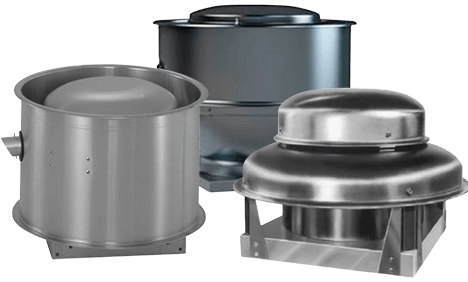
Roof Exhaust
Keep Cool, Stay Efficient



How Can We Help?
HVACDirect.com offers a wide selection of in-stock wholesale Roof Exhaust Fans ready to ship in bulk. We also offer custom Roof Exhaust Fans fit for any project. Get expert advice today when you call.
Call Now and Get a Free Quote on Custom Roof Exhaust Fans Today! 1-888-295-2009


A roof exhaust fan is a rooftop ventilation unit that pulls air from a commercial building and discharges it outdoors. It can exhaust heat, humidity, odors, and other unwanted air to support indoor-air quality and reduce moisture buildup in the building, based on the fan type and application.
An electric motor spins a propeller or centrifugal wheel to create airflow that draws indoor air into the exhaust system and sends it outside. The fan must deliver the required CFM at the total static pressure created by ductwork, fittings, dampers, filters, and other system components.


Roof exhaust fans are commonly used in commercial kitchens, warehouses, manufacturing plants, and laundry facilities. The right fan can remove heat, humidity, odors, grease-laden air, fumes, or dust based on the building’s ventilation needs.
Commercial kitchens that exhaust grease-laden vapors need a restaurant grease fan, typically a centrifugal upblast model rated for this application. These upblast fans discharge grease-laden exhaust upward and away from the roof, while proper installation and regular cleaning help reduce grease buildup. Choose a UL 762-rated model when required, confirm compatible accessories with the manufacturer, and follow the cleaning schedule required for the kitchen exhaust system.
Warehouses may use roof exhaust fans to remove heat and stale air that collect near high ceilings, with required CFM based on the building’s ventilation needs. As the fan exhausts indoor air, makeup air must enter through planned openings or a dedicated makeup-air system. For moisture-sensitive inventory, evaluate humidity-control equipment in addition to exhaust ventilation.
Manufacturing facilities may use axial fans for high airflow at lower static pressure or centrifugal fans when ductwork and system resistance require stronger pressure performance. These roof exhaust systems capture contaminants from work zones and safely discharge them outdoors, away from building supply air intakes. A properly designed exhaust system can help remove process air from the work area, but contaminant control and regulatory compliance require application-specific engineering and local code review. Safe discharge depends on fan design, exhaust velocity, contaminant characteristics, building layout, and applicable requirements.
Commercial laundry facilities may use roof exhaust fans to remove heat and humidity, with the fan type selected for the required airflow, duct system, and air conditions. The continuous extraction of humid indoor air helps reduce structural ceiling condensation from dripping back down onto active processing equipment and clean linens.
Roof exhaust fans can be installed on flat, low-slope, metal, and built-up commercial roofs when the roof structure, curb, flashing, and fan mounting method are designed for the specific installation.
Flat or Low-Slope Roofs: These configurations are standard on warehouses and retail facilities and utilize custom curb mounts to support heavy equipment.
Membrane Roofing Materials: TPO, EPDM, PVC, built-up roofing, and modified bitumen require a properly flashed curb and roof-system-compatible installation method.
Standard Metal Roofs: Industrial and agricultural buildings frequently utilize metal surfaces equipped with retrofitted curbs and custom flashing kits.
Standing Seam Metal Roofs: This profile requires specialized non-penetrating clamp mounting systems to prevent structural leaks along the raised seams.
Concrete or Built-Up Decks: These decks can support heavier equipment, but the curb attachment, roof opening, structural load, and waterproofing must be evaluated for the specific fan.
Selecting the correct curb adapter and sealing material for your specific deck profile is critical to prevent moisture intrusion. Confirm roof loading, curb dimensions, flashing details, and manufacturer installation requirements before installation to help prevent leaks and protect warranty coverage.
The right roof exhaust fan depends on a variety of different factors, as commercial facilities may use propeller upblast, centrifugal upblast, centrifugal downblast, or restaurant grease fans. Their use is based on required CFM, total static pressure, air conditions, and discharge requirements. Reviewing the unique mechanical layout requirements for each style allows you to select the precise hardware setup for your facility.
Commercial warehouses may use propeller upblast fans to exhaust high volumes of hot, stale, or humid air. These fans use a propeller to move large volumes of hot, stale, or humid air out of the building, with the upblast configuration directing exhaust air upward and away from the roof surface. Choose a propeller upblast fan when the application needs high airflow with relatively low duct resistance, such as a large open area with minimal ductwork.
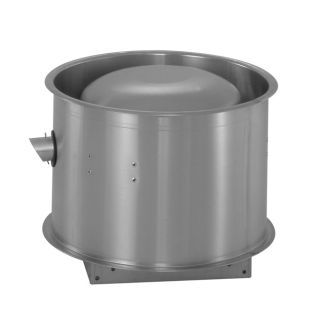
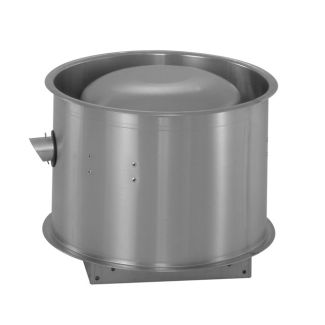
Commercial facilities with long, restrictive ductwork networks rely on centrifugal upblast fans to push clean or particulate-laden air upward into the atmosphere. The upblast design of these robust systems, which use backward-inclined wheels, discharges exhaust away from the roof and may help reduce re-entrainment when the system is properly designed. Compare current product listings for pricing because cost varies by CFM, motor horsepower, drive type, construction, and required accessories.
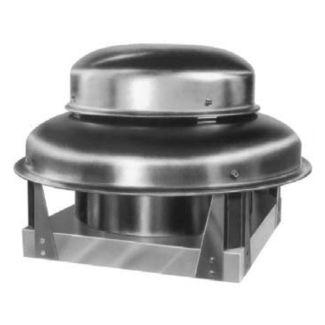
Centrifugal downblast fans are commonly used for quieter, general-purpose exhaust applications involving relatively clean air. These spun aluminum ventilators are highly popular for localized office ventilation, school buildings, and clean indoor spaces. Their compact profile allows them to blend into the roofline while supporting proper indoor air quality. Consult the appropriate listings for pricing and select a downblast fan by required CFM, static pressure, motor specifications, and curb-cap dimensions
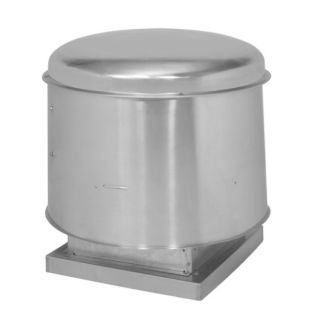
Commercial kitchens with Type I hoods require specialized restaurant fans listed to UL 762 to extract grease-laden vapors. Installing these purpose-built safety units can minimize severe grease accumulation hazards and keep your enterprise aligned with regional fire safety regulations. These models are designed for grease-laden exhaust, and pricing varies by airflow, motor, drive type, listing, and required accessories. Select a UL 762-rated restaurant grease fan when required and coordinate installation, grease management, and cleaning with applicable local requirements.
A roof exhaust fan must deliver the required CFM at the system’s total static pressure, with a fan type, roof curb, and discharge design that fit the application. HVACDirect.com recommends sizing roof exhaust fans by required airflow, static pressure, and application conditions rather than floor area alone.
Required CFM: Calculate required airflow from room volume, air changes per hour, heat load, contaminants, makeup air, and applicable project requirements. Roof exhaust fan capacities range from smaller commercial models to high-capacity industrial fans, so select a fan using its published performance table at the required operating point.
Static Pressure: Select a fan that can provide the required CFM at the total static pressure created by ducts, elbows, filters, dampers, louvers, and roof terminations. Use the manufacturer’s performance data to confirm that the fan delivers the right airflow at the system’s total static pressure.
Application: Match the fan to the air being exhausted, such as heat, humidity, general warehouse air, fumes, smoke, grease, or corrosive contaminants. HVACDirect identifies roof exhaust fan applications that include warehouses, manufacturing plants, commercial kitchens, garages, farms, paint booths, welding booths, medical centers, and mechanical rooms.
Fan Type: Choose a propeller, centrifugal, upblast, restaurant grease, or other specialty roof fan based on the required static pressure and contaminant type. Centrifugal and upblast fans are commonly used when the system needs stronger pressure performance or upward discharge, while grease-rated fans are designed for commercial kitchen exhaust.
Roof Curb Dimensions: Match the fan base and duct opening to the roof curb’s length, width, height, and connection style. Confirm that the curb is level, weather-sealed, structurally supported, and designed for the exact fan model before installation.
Discharge Configuration: Choose an upblast, horizontal, or other approved discharge arrangement based on building clearance, roof layout, code requirements, and the type of exhausted air. Upblast roof fans discharge air upward and away from the building, which can help keep smoke, odors, and grease-laden exhaust from re-entering nearby openings.
A correctly sized roof exhaust fan balances CFM, static pressure, fan construction, duct resistance, curb compatibility, and discharge direction. Before ordering, confirm the fan performance curve, electrical requirements, roof curb dimensions, rooftop clearances, and applicable local requirements with a qualified professional.
The most important features are CFM at total static pressure, fan and discharge type, motor and drive specifications, electrical requirements, weather resistance, sound level, backdraft protection, and roof-curb compatibility. Buyers should compare the following primary features to maximize long-term systemic efficiency and preserve the integrity of the exterior deck interface.
Airflow Capacity (CFM): Select a fan that delivers the required CFM at the system’s total static pressure to support the planned ventilation rate.
Discharge Direction: Upblast units forcefully propel toxic fumes or heavy grease away from the building exterior while downblast models safely distribute clean building air downward along the deck profile.
Motor And Drive Type: Direct drive fans can reduce belt maintenance, while belt-drive models may allow adjustment of fan speed and airflow when supported by the manufacturer.
Weather Resistance: Spun aluminum housings or heavy gauge galvanized steel frames protect internal components from rain intrusion and high wind shear without rusting over years of service.
Roof Curb Compatibility: Matching the physical curb footprint with the architectural deck profile ensures a completely weatherproof structural seal that isolates building vibration and blocks moisture leaks.
Curb Cap Size: The fan’s curb-cap size dimensions are variable and should be based on the manufacturer's specified curb, curb cap, or curb adapter dimensions.
Review the fan performance data, electrical specifications, curb-cap dimensions, and installation instructions before ordering to reduce compatibility problems. Selecting a properly balanced fan layout reduces local energy consumption while maintaining optimal environmental safety across your commercial building facility footprint.
ACME, Coolair, Hartzell, and J&D Manufacturing offer roof exhaust fans for commercial, industrial, agricultural, and specialty ventilation applications. The right brand depends on required CFM, static pressure, drive type, motor voltage, roof curb size, and the type of air the fan must exhaust.
ACME: These models suit commercial facilities that need high airflow through ducted systems. Compare the exact ACME model’s published CFM, static-pressure performance, motor, drive type, and curb-cap dimensions before selection.
Coolair: Coolair builds belt-drive upblast axial roof fans for commercial, industrial, and agricultural ventilation. Compare available upblast models by propeller size, maximum CFM, motor horsepower, electrical phase, and curb-cap size.
Hartzell: Hartzell roof fans are commonly listed for rugged rooftop ventilation in commercial and agricultural applications. Compare the exact model’s CFM, motor type, drive design, and curb dimensions before choosing a Hartzell fan.
J&D Manufacturing: J&D Manufacturing offers propeller-style ventilation products for agricultural spaces, barns, greenhouses, and other high-airflow applications. Review the specific J&D roof-fan model for required CFM, electrical supply, building layout, and exposure to dust, humidity, or corrosive conditions.
ACME is a strong fit for higher-static-pressure, ducted clean-air exhaust, while Coolair offers large upblast airflow for commercial and industrial roofs. Hartzell and J&D Manufacturing are worth comparing for rugged agricultural and general-ventilation applications. Selecting a reliable commercial manufacturer helps secure long-term warranty support and airflow performance.
The total upfront cost of implementing a commercial roof exhaust fan system can scale from $499 to $8,900+, based on the volumetric airflow capacity requirements and complexity of your roofing structural deck profile. Evaluating upfront costs alongside long-term operating expenses allows facilities to plan their ventilation budgets more effectively.
Prices shown here and below are planning estimates, not guaranteed costs. Equipment prices reflect current HVACDirect.com listings, where buying direct may save up to 70% on HVAC equipment versus local company pricing. Installation, labor, energy, maintenance, and service costs vary by system size, efficiency, installation complexity, local contractor and utility rates, climate, and location. For an accurate project estimate, consult a qualified local HVAC professional or an HVACDirect.com specialist to point you in the right direction.
Physical Product Cost: Standard commercial spun aluminum downblast or upblast exhaust units on HVACDirect.com generally range from $499 to $3,800+ depending on the configuration, wheel size, motor horsepower, and whether the fan is listed to UL 762.
Installation Cost: Professional installation and structural roof integration typically add $1,500 to $4,500 to the total deployment budget to cover necessary crane rentals, custom curb flashing, waterproofing, and dedicated electrical wiring work. Obtain a site-specific quote from a qualified installer.
Operational Cost: Regular operational expenses are primarily driven by localized commercial electrical utility rates, total motor runtime schedules, and standard belt replacement maintenance.
Carefully balancing these interconnected budget variables against your target room air change requirements ensures your facility maintains strict regional compliance without incurring unnecessary structural cost overruns. Selecting direct drive motors where applicable can lower long-term maintenance costs, while opting for factory assembled roof curbs can reduce installation errors on site.
HVACDirect.com offers roof exhaust fans for commercial and industrial applications, including in-stock wholesale options, custom roof-fan solutions, and expert advice for product selection. The platform provides a direct logistics pipeline to streamline high-volume equipment procurement based on your building’s project requirements.
Top Brand Equivalents at Better Prices: The inventory features premium industrial-grade equipment comparable to industry staples like Acme and Hartzell, delivering matching structural durability and static pressure capabilities at a lower capital cost.
Premium Heavy Duty Industrial Integration: The platform supplies massive high-volume air movers to safely manage severe multi-thousand CFM facility requirements.
Specialized Ridge Fan Solutions: Commercial agricultural operators can source dedicated J&D direct-drive ridge fans equipped with corrosion-resistant poly shutters and seamless transition bodies engineered explicitly for zero-maintenance barn ventilation.
Pre-Assembled Advanced Motor Drive Packages: Many available centrifugal units arrive pre-wired to convenient external junction boxes or come packaged with advanced micro drive controllers to seamlessly run high-powered three-phase fan motors on basic single-phase electrical lines.
Partnering with an established wholesale distributor protects your structural budget while ensuring your technicians receive correct, factory-warranted submittal sheets prior to on-site implementation. Before scheduling installation, confirm stock status, lead time, freight requirements, delivery access, fan weight, roof curb dimensions, and electrical needs.
Yes, they can be installed, as flat and low-slope roofs are among the most common architectural surfaces for commercial roof exhaust fan installations. Flat roof installations commonly use a manufacturer-approved roof curb to raise and support the fan and allow the roofing system to be flashed around the opening. Consider curb height, insulation, structural support, and flashing details for the specific roof and fan model.
The best option for a flat roof is often a centrifugal roof exhaust fan paired with a flat-pitch insulated roof curb, but the best choice also depends on the air being exhausted, required CFM, total static pressure, discharge direction, and compatibility with the roof curb. Centrifugal models are ideal because their backward-curved aluminum impellers effortlessly handle internal duct static pressure while keeping the motor safely isolated from weather extremes. Downblast fans are commonly used for general clean-air exhaust, while upblast and restaurant grease fans may be selected when upward discharge or grease-laden exhaust handling is required.
Yes, many flat roof exhaust fan installations use a manufacturer-approved roof curb to support the fan and provide a flashing point for the roofing system, with potential pooling water and snow loads in mind. This 8- to-12-inch raised structural frame provides a rigid platform for the fan to mount to while allowing roofing contractors to flash a completely watertight, weatherproof seal directly up its side walls. Installing a flat roof fan without a curb may void your equipment warranty, so follow the fan manufacturer’s installation instructions and the roof-system requirements to determine whether a curb, curb adapter, or another mounting method is required.
Roof exhaust fans are designed with weather-resistant components, but the specific protection varies by fan type and model. Downblast fans typically use a hooded housing, while many upblast fans use an open upblast discharge that directs exhaust upward and away from the roof. A separate vent cap or weather hood is not always required. Check the manufacturer’s installation instructions to confirm required flashing, weather protection, dampers, and accessories.
Yes, a kitchen exhaust fan can vent through a flat roof. For grease-laden exhaust, select a restaurant grease fan rated for that application and follow the manufacturer’s installation requirements. This setup must be mounted on a code-compliant, insulated roof curb to lift the assembly above potential standing water and ensure a completely watertight seal with the flat membrane. Additionally, commercial installations require an attached grease collection box to prevent hazardous runoff from collecting on and degrading the TPO or rubber roofing materials.
Yes, roof exhaust fans can be highly energy efficient. A fan with certified performance ratings can help you compare airflow and sound data, but energy use also depends on motor efficiency, system static pressure, controls, and runtime.
A flat roof exhaust fan may leak because of damaged flashing, failed sealant, an improperly installed curb, water entry through the fan housing, or condensation inside the duct. It can also occur if the unit's backdraft dampers fail to close properly, allowing driving rain to bypass the weather hood and travel straight down the ductwork. Additionally, poor duct insulation can create severe internal condensation that easily mimics a structural roof leak when warm indoor air hits the cold metallic ventilation stack.