Your cookie preferences
We use cookies to remember your preferences and understand how shoppers use our site, helping us improve your shopping experience.
Read our privacy policy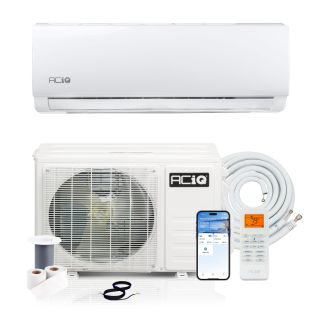


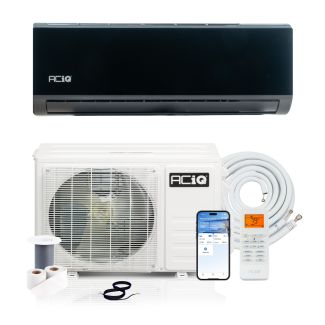
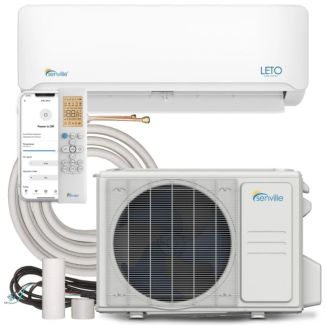

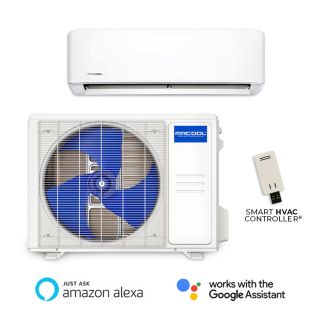
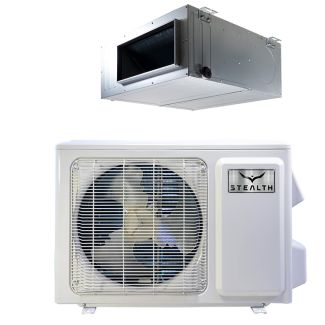


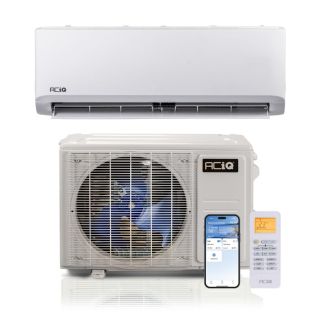

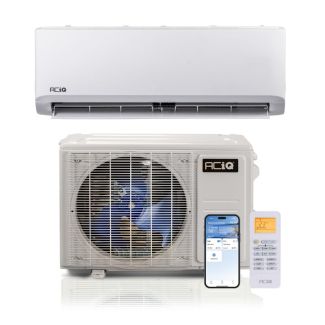
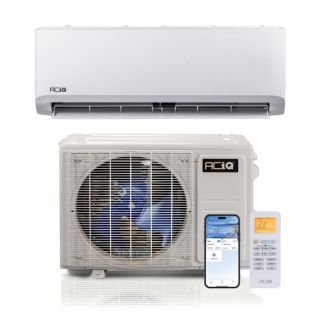
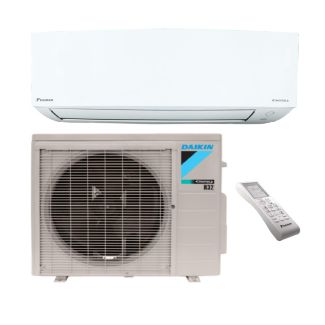

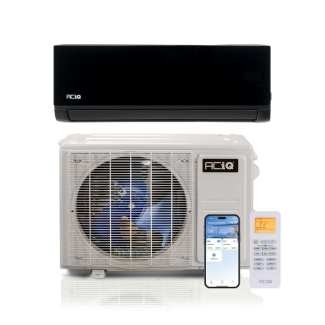


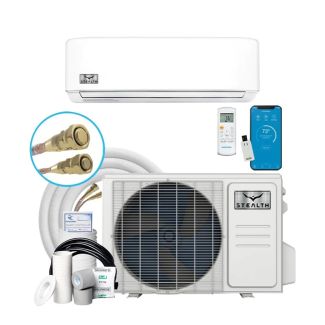
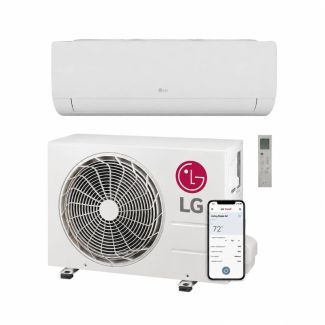
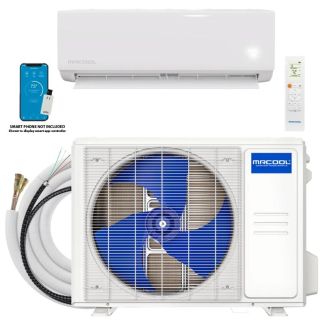
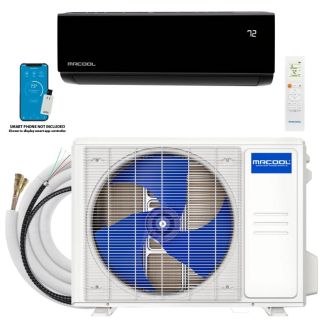

Shed mini split systems are ductless HVAC units designed to heat and cool detached sheds and other small standalone structures without ductwork. They use one outdoor condenser and one indoor air handler connected through a small wall opening for refrigerant lines, drainage, and power.
These systems work by circulating refrigerant between the indoor evaporator coil and the outdoor condenser to absorb and transfer thermal energy. In cooling mode, the indoor unit pulls warm air across the evaporator coil, removes heat and moisture, and sends that heat outdoors.
Mini split systems are a strong choice for insulated sheds because they deliver efficient heating and cooling in one dedicated zone. These compact systems are uniquely engineered to zone standalone structures independently, ensuring that your storage, workshop, or backyard office remains comfortable throughout the entire year.
High Energy Efficiency: Mini splits utilize advanced inverter technology to modulate compressor speeds dynamically, lowering utility costs compared to traditional window units.
Flexible Mounting Options: Wall mounted, floor mounted, and ceiling mounted air handlers let shed owners choose a location that preserves as much usable workspace as possible.
Whisper-Quiet Operation: Indoor air handlers typically run at whisper-quiet sound levels between 19 and 30 dB, creating a peaceful environment for backyard home offices or art studios.
Enhanced Structural Security: Because mini splits only require a 3-inch hole through the shed wall for line sets, they eliminate the break-in vulnerabilities associated with window air conditioners.
Advanced Air Filtration: Built-in multi-stage air filters actively capture wood dust, sawdust, and ambient moisture, protecting sensitive tools and equipment from rust or degradation.
Compared with many space heaters, portable air conditioners, and window units, a properly sized mini split can provide quieter operation, better efficiency, and more consistent temperature control, although inadequate insulation will reduce the performance of any HVAC system.
Mini splits work best in enclosed, insulated sheds used as offices, studios, workshops, or storage spaces.
Backyard Home Offices: Detached remote workspaces require ultra-quiet noise levels and steady climate control to protect computer hardware and maintain productivity. Shed-installed mini splits provide whisper-quiet operation from 19 to 40+ decibels (dBA), which is quiet enough for remote work and focused tasks.
Art and Hobby Studios: Creative workshops benefit from the constant temperature stability and air filtration provided by mini splits to safeguard raw canvas fabrics, delicate oil paints, and sensitive wooden materials.
Tool and Machinery Workshops: Heavy equipment sheds use mini split climate control to completely prevent moisture from condensation from rusting metal machinery and hand tools.
Man Caves and She Sheds: Recreational backyard retreats utilize independent space zoning to provide rapid, on-demand heating or cooling when the building is occupied for entertainment.
Potting and Agricultural Sheds: An insulated potting shed may benefit from supplemental heating, cooling, and moisture removal, but sensitive plants or seeds may require separate humidity controls.
Before selecting a system, consider missing insulation, direct sun exposure, air leaks, high ceilings, and frequently opened doors because these conditions can substantially reduce heating and cooling performance.
Yes, you can install a mini split system in your shed, but your installation path depends on whether you choose a DIY-rated system or a standard system that requires a licensed professional. Selecting the correct installation method impacts your upfront equipment costs, your long-term equipment warranty protection, and the final structural safety of your outbuilding.
DIY Shed Installation: Do-it-yourself, or DIY, installations utilize specialized kits from brands like MRCOOL or Stealth with DIYCOOL technology that feature factory pre-charged refrigerant line sets to reduce the need for refrigerant handling tools during installation.
Professional Shed Installation: These sorts of installs are required for standard equipment lines like the ACiQ Essentials series because a licensed technician must mechanically flare the copper lines, pull a deep system vacuum, and safely release the pressurized refrigerant.
Before purchasing any equipment, you must check with your local municipal planning office regarding required electrical and building permits to ensure your shed fully complies with regional zoning codes.
A shed mini split system typically costs between $1,600 and $5,400 installed, depending heavily on the brand choice and your chosen installation path. Budgeting accurately requires balancing the upfront equipment cost with local professional labor rates.
Equipment Cost: Purchasing a single zone mini split system engineered for compact structures requires an equipment expenditure ranging from $550 to $2,400, depending on the SEER2 efficiency tier and heating capabilities.
Installation and Labor Cost: Professional HVAC installation may cost approximately $1,000 to $3,000, while required electrical upgrades, long line-set runs, or structural work can increase the total.
Operation and Maintenance Cost: Electricity may cost approximately $25 to $100+ per month to operate, depending on the shed’s insulation, system capacity, operating hours, outdoor temperatures, and local electricity rates. If the filters are washable, routine maintenance costs stay low and can be as minimal as $0, but annual service may still apply, with professional annual cleaning running between $80 and $200.
Before moving forward with your backyard building upgrade, you must verify structural permit requirements with your local municipal office as permits typically cost between $150 and $300, depending on your location.

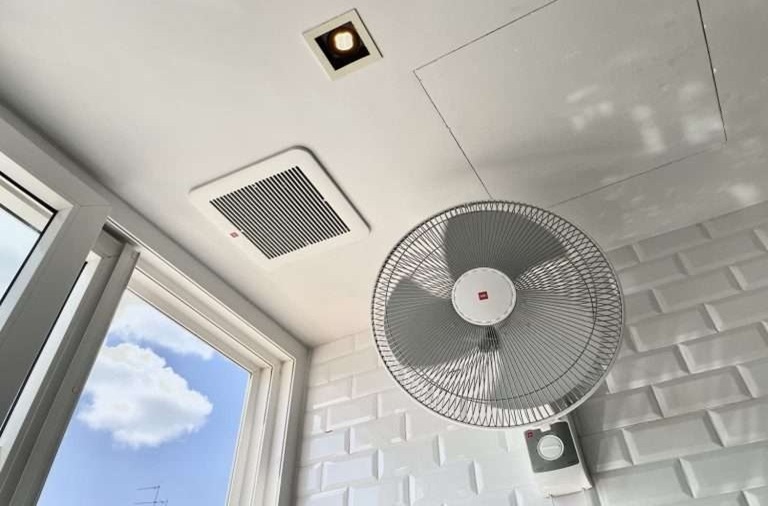
A standard high-wall mini split is usually the best choice for a shed because it saves floor space and installs cleanly on the wall. If shelves block the upper wall area, a low-profile floor console or a flush-mounted ceiling cassette provides a highly compact alternative.
Most shed mini splits need a dedicated 115V or 230V circuit with the correct breaker and an outdoor disconnect switch. All wiring must match the manufacturer’s instructions and local electrical code, including requirements for outdoor-rated conductors, conduit, grounding, and disconnects.
A shed mini split usually needs 20 to 30 BTUs per square foot. A standard 10-by-12 foot shed typically uses a 9,000 BTU system, while larger 12-by-20 foot-long structures generally require a 12,000 BTU unit to maintain thermal stability.
A single zone mini split configuration is almost always the ideal choice for a shed because these structures function as a single open room. This setup pairs one outdoor compressor with one indoor air handler, keeping equipment and installation costs low. Multi zone configurations are only necessary if your outbuilding has been physically separated into separate rooms by walls, such as an insulated office space divided from a raw tool storage area.
Yes, mini splits can heat and cool a shed with a reversing valve that changes refrigerant flow. This design allows the heat pump to efficiently pull heat from outdoor air during winter and remove heat from indoor air in summer. Some cold-climate mini split models, including those from ACiQ and MRCOOL, are rated to continue heating at outdoor temperatures below 0°F, but minimum operating temperatures and available heating capacity vary by model.
Large sheds may need a heavy-duty 60,000 BTU or 5 ton capacity configuration or multiple mini split systems, depending on the layout, insulation, and heat load. For massive single-room workshop envelopes, a single zone 36,000 BTU system easily covers open floor layouts up to 2,000 square feet without uneven cooling. If an industrial shed expands beyond these substantial dimensions, you can install multiple independent outdoor condensers to scale your total climate coverage indefinitely.
You only need a cold-climate mini split if your region experiences winter temperatures below 20°F and you require consistent heating to protect tools or workspace electronics. Standard heat pumps suffer a sharp drop in heating efficiency as exterior temperatures approach freezing, whereas specialized cold-climate models like ACiQ’s Extreme and LG’s LGRED can maintain high capacity down to -15°F. If your winters are mild or you only use the shed for basic summer cooling, a standard mini split is more than sufficient.
Yes, mini splits feature a dedicated "Dry Mode" that explicitly reduces indoor humidity by drawing excess moisture directly out of the air. Many premium systems from these approved brands also include a "Self-Cleaning Mode" that automatically dries the internal evaporator coil after operation to help reduce moisture inside the unit and limit mold growth. If you have a severely-leaking or damp shed space, a mini split is not a replacement for a dehumidifier, which can more ably remove built-up humidity.
Mini split systems are generally safe to use around standard tools because their active dehumidification properties directly prevent metal corrosion and rust. However, because ductless units are not explosion-proof, avoid using them in sheds that store unsealed fuel or strong chemical vapors unless the space is properly separated and ventilated. If you store volatile substances in your shed, they must be kept in airtight, spark-safe containers completely isolated from the indoor handler's air intake.
You do not have to insulate a shed first, but insulation greatly improves mini split efficiency. Uninsulated outbuildings require 15% to 30% more equipment capacity to compensate for continuous heat loss through uninsulated walls and roof.
