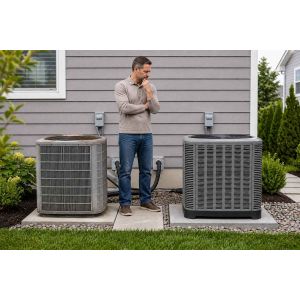
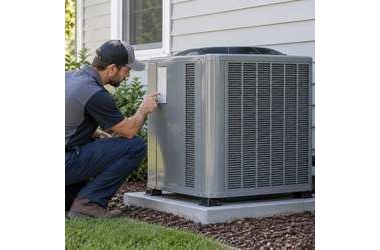
When an older R-410A outdoor condenser fails, replacing the entire HVAC system is not always the only option. If the indoor evaporator coil or air handler is still in usable condition, an A2L refrigerant detection and mitigation kit may allow that indoor equipment to remain in place while the outdoor unit is replaced with a new R-32 or R-454B condenser.
When the outdoor portion of a central air conditioner fails, replacing only that unit can sound like the simplest and least expensive solution. Sometimes it is. However, a central split system is not a collection of interchangeable parts. The outdoor condenser and the indoor evaporator coil work together as one refrigerant circuit, and the combination determines the system's capacity, efficiency, humidity control, reliability, and safety.
Indoor air quality problems like humidity, stale air, dust, and allergens can’t be solved by your HVAC system alone. This guide explains how ERVs, dehumidifiers, and air purifiers work, when to use each one, and how to combine them so your home has fresher, healthier, and more comfortable air in every season.
Learn how combining ceiling fans, exhaust fans, ERVs, and HRVs creates an energy-efficient ventilation strategy that cuts heating and cooling costs by 10-30% while improving indoor air quality. Get expert sizing tips and brand recommendations.
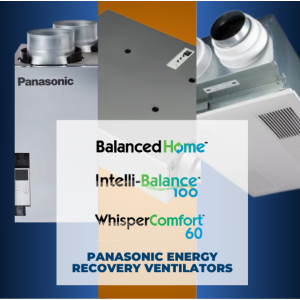
Looking for the best ERV for your home in 2025? Panasonic offers three top-rated series—BalancedHome™, Intelli-Balance®, and WhisperComfort®—each designed to improve indoor air quality while reducing energy costs. In this guide, we review features, applications, and real homeowner feedback so you can confidently choose the right ERV model for your space.
Energy Recovery Ventilators (ERVs) bring in fresh outdoor air while transferring heat and moisture to keep your home comfortable and efficient year-round. This guide explains how ERVs outperform traditional fans and HRVs, when to choose each option, and how to size the right Panasonic model for your space. Learn the homeowner benefits—cleaner air, mold prevention, and lower utility costs—and shop WhisperComfort, Intelli-Balance®, and BalancedHome™ systems.
If you’ve ever walked into a damp basement or noticed a musty smell drifting through your home, you already know high humidity isn’t just uncomfortable — it can damage your property and impact your health. The big question for many homeowners isn’t whether to buy a dehumidifier, but which type is worth the money.
Sizing a commercial dehumidifier isn’t just about comfort—it’s about compliance, protecting equipment, and preserving products. This guide breaks down how to calculate your daily moisture load (in pints-per-day), match it to the right Quest or industrial unit, and avoid costly under- or over-sizing. Perfect for gyms, warehouses, grow operations, and restoration professionals who need a clear, no-nonsense approach to “what size commercial dehumidifier do I need.”
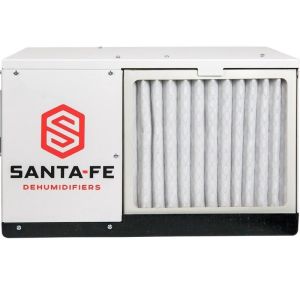
Not sure what size dehumidifier you need? This beginner-friendly guide walks you through measuring your space, assessing moisture levels, and matching conditions to the right dehumidifier. Whether you’re dealing with a damp basement, a musty crawl space, or an entire home with high humidity, you’ll find clear answers and trusted product recommendations—especially from brands like Santa Fe. Perfect for homeowners seeking healthier air and lasting comfort.
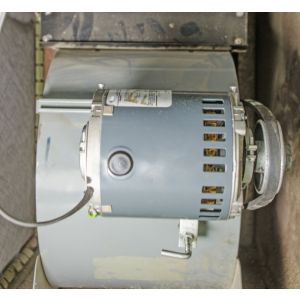
Multi-speed blower motors improve on single-stage systems by offering two preset speeds—low for gentle airflow and high for rapid heating or cooling—delivering more consistent comfort and lower energy bills. Variable speed blowers, powered by ECM technology, continuously modulate airflow for ultra-precise temperature control, quieter operation, and enhanced air filtration. Discover which blower type fits your performance needs and budget at HVACDirect.com.
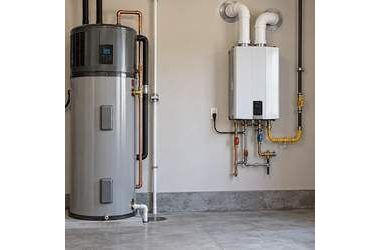
Compare heat pump and tankless water heaters by efficiency, hot-water capacity, installation requirements, and operating cost to find the best fit for your home.